Firelight and You

Majorettes with flaming batons

Majorettes with flaming batons

Today, the Olympic torch relay began its final leg before the 2012 Summer Olympic Games officially begin in London on July 27.

The torch will be used to light the Olympic Flame, an inspirational symbol of the Games, which will burn until the Olympics conclude on August 12.

Fire and fiery flames are often associated with danger and negativity (ex. the recent, devastating Colorado wildfires), so it’s interesting to consider all of the positive spirit associated with the Olympic torch and flame.

Beyond the Olympic torch or a romantic fireplace with flames providing warmth on a cold winter’s day, are you aware of other instances when fire is viewed or used in positive ways?  I can think of a couple of examples.

As a young girl, I remember watching majorettes in the local high school band twirling their flaming batons.  I can recall how excited and amazed I was to watch each majorette throw her flaming baton in the air, twirl around, and then successfully catch the baton.

And, who could forget all the lighters aflame at the end of rock concerts, when the attendees light portable flames to signal their appreciation and want of more to the performing artists?

Some people propose that an individual can have “a fire within.”  Would you agree?

Do you think that people can be lights to inspire others?  Has anyone ever lit a fire within you and inspired you to be and achieve more?

Which individuals or what things have been the firelight in your life so far?

Jacks in Boxes, Surprises and You

Jack-in-the-box

image of Jack-in-the-box toy online at growingtreetoys.com

According to Dictionary.com, a surprise is “a completely unexpected occurrence.”

As a writer, I appreciate reading stories where the surprise factor is included.

Surprise endings to books, plays and movies often heighten their entertainment factor.  For example, check out this fun, “Top 15 Amazing Movie Endings” list to be reminded of movies with last moments that were, according to Listverse.com,  “simply astounding.”

Not every writer can successfully weave the surprise factor into a narrative.  However, it’s pretty safe to assume that all writers have successfully experienced real-life surprises.

In fact, it seems that all of us experience surprises starting at an early age.  I can still recall playing with a Jack-in-the-box as a child and being thrilled each time the jester popped out of the box and surprised me.

What about you?  How do you feel about surprises?  Do you enjoy being surprised, or are you uncomfortable with experiencing unforeseen moments?

Finally, what surprises, good and bad, have been the most memorable in your life so far?

Finding Unexpected Pairs

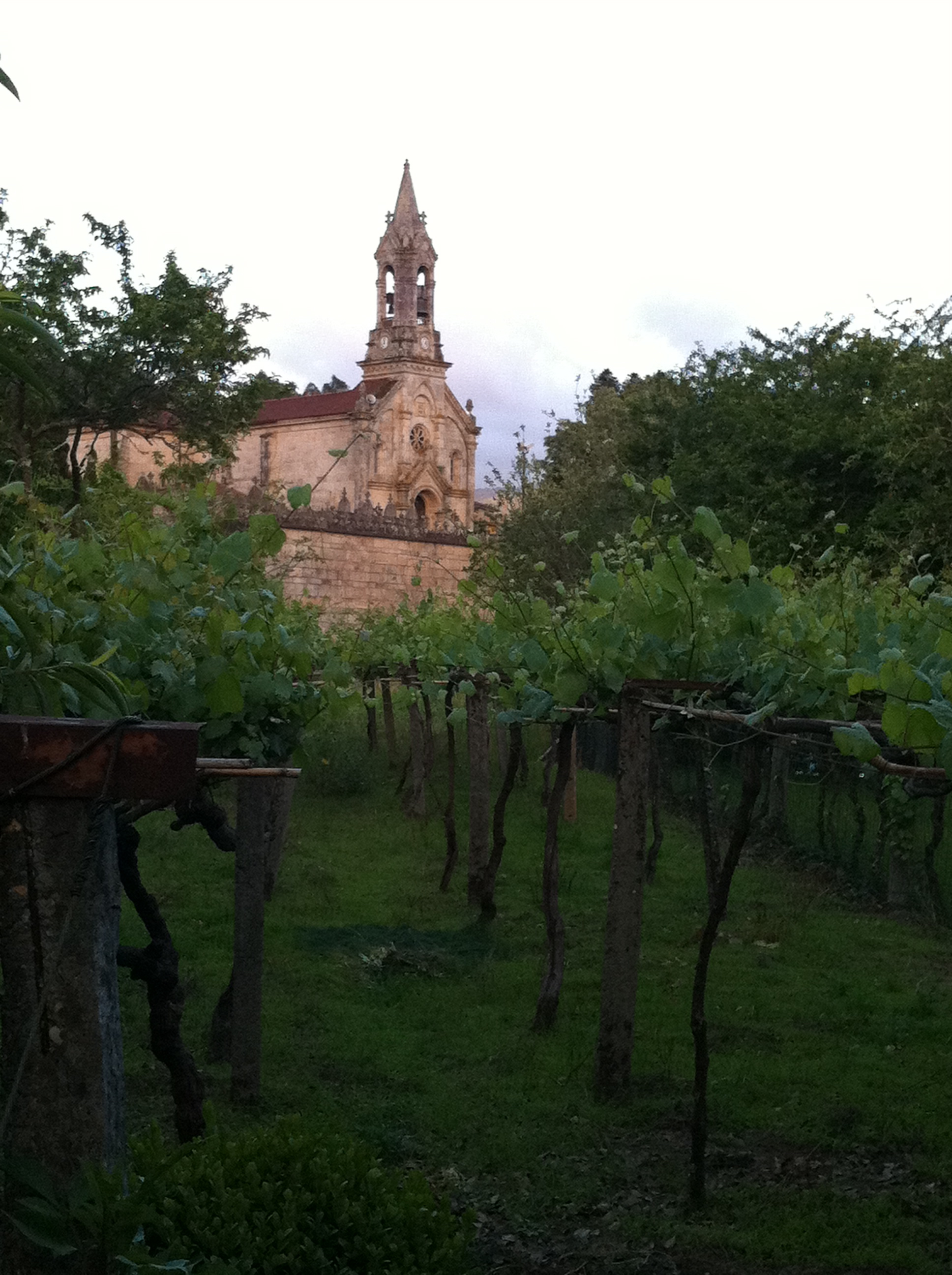
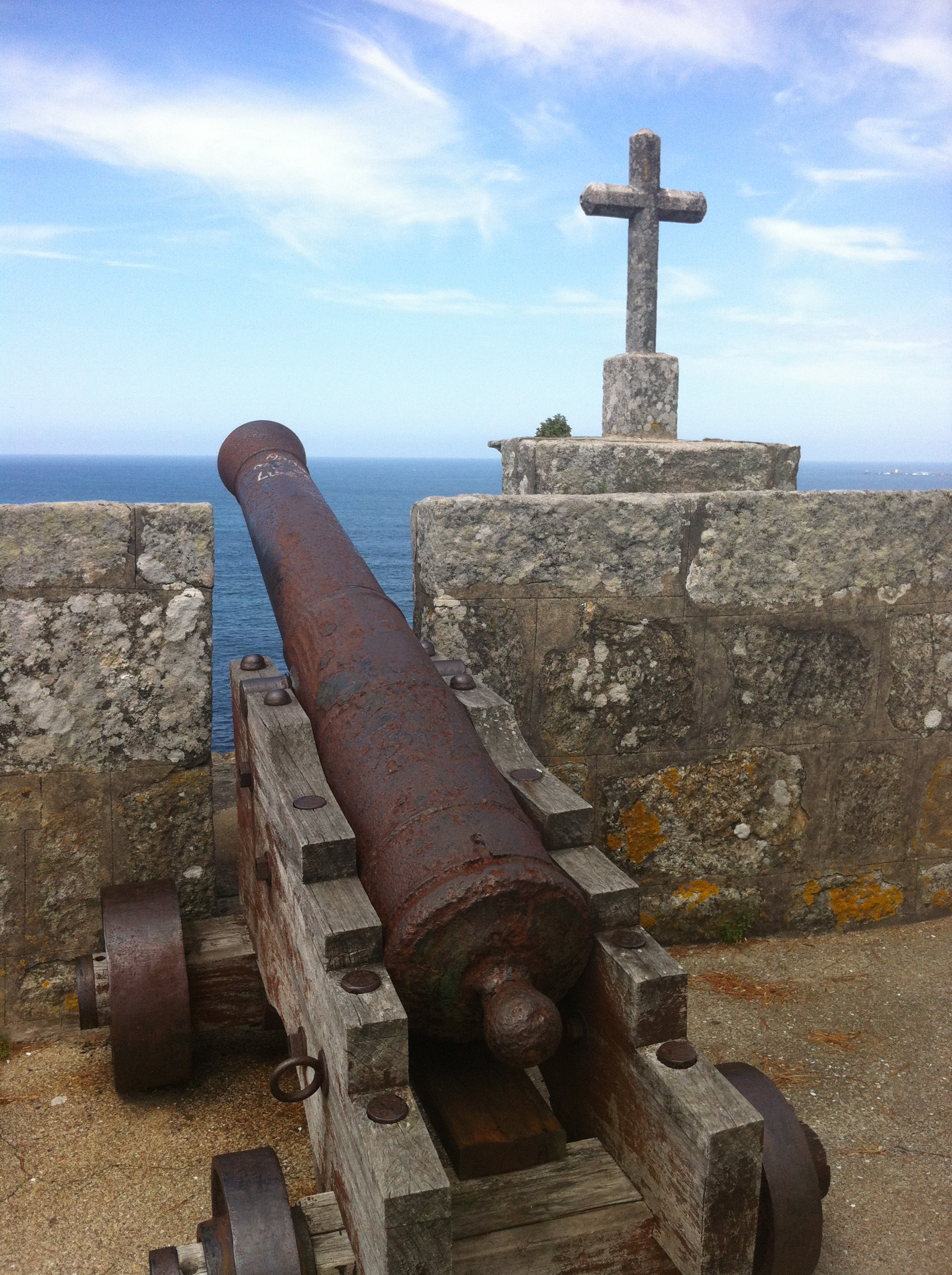
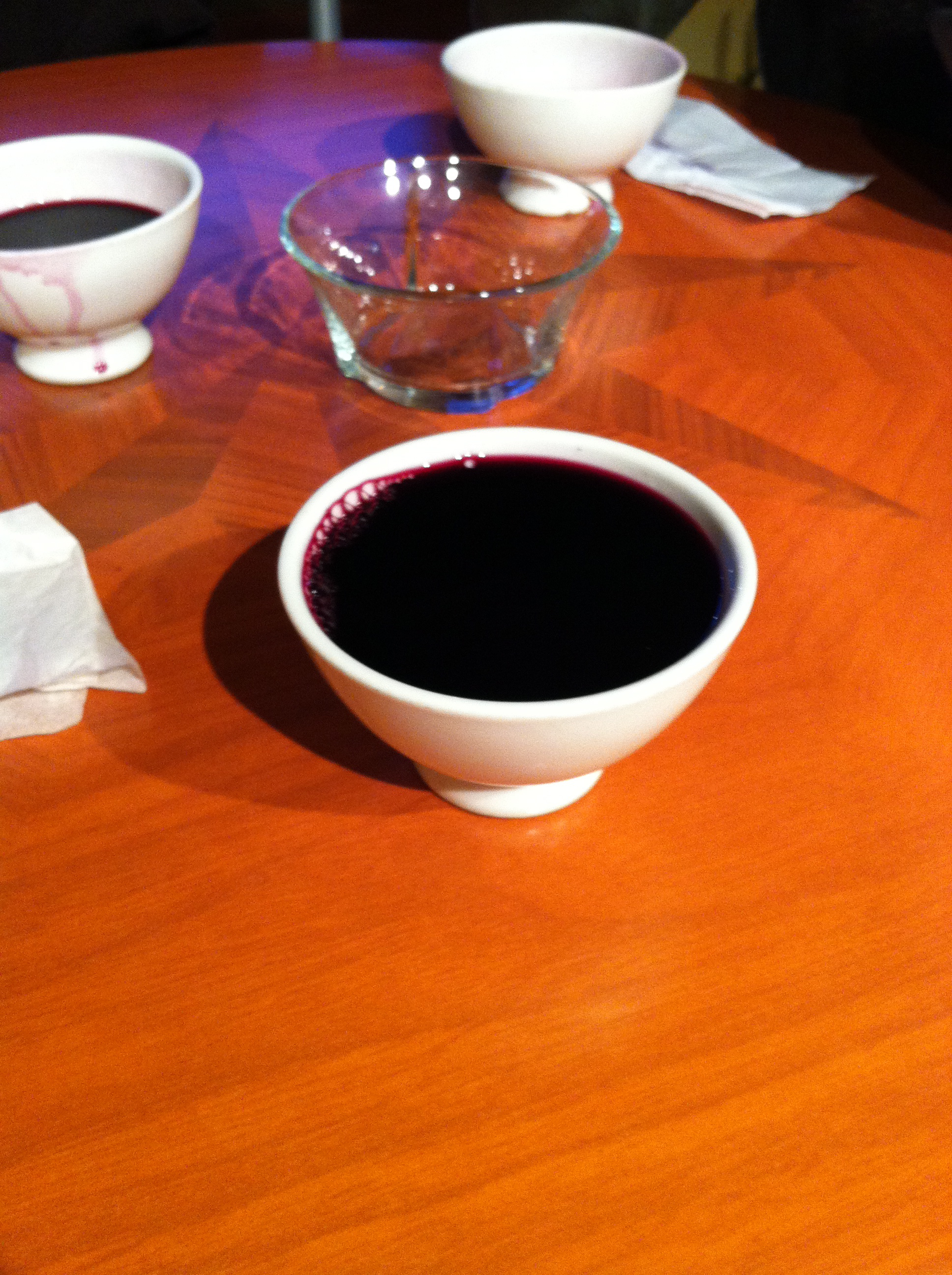
My husband’s ancestral origins link to Galicia, Spain.  Galicia, known as “the Green Spain, ” is a place where you can sometimes find the unexpected.  Below are three images from the town of Gondomar in Galicia that seem to reveal a somewhat unexpected pairing of things.

What do you think?  Do you think these pairings are unusual?  For example, when you think of a church, do you also think of wine? And, when you think of crosses and religion, do you also think of cannons and war?  Last, when you think of wine receptacles, do you think about small, white porcelain cups?

I’d love to know whether you think these three pairs of images convey any element of surprise, and, I’d also enjoy seeing any unexpected pairings that you’ve captured.

Church and Vines in Gondomar, Spain

Church and Vines in Gondomar, Spain.

Cannon and Cross in Congomar, Spain

Cannon and Cross in Gondomar, Spain. May 2012.

"Glasses" of vino in Gondomar, Spain

“Glasses” and Vino in Gondomar, Spain. May 2012.

Read East, Young Man!

Go East graphicThe first day of summer, or Summer Solstice, was Wednesday, June 20, 2012, so, summer is officially underway here in the U.S.

Each year with its arrival, summer brings the return of fun rituals, such as catching rays at the local pool, making road trips to beaches, attending outdoor parties and picnics and, of course, participating in the major U.S. summer holiday celebration, the Fourth of July.

Another summertime ritual is the promotion of summertime reading lists by countless U.S. online and print publications — the idea being that summer, a time when a majority of Americans take vacations, is an opportune time for individuals to slow down, relax and read.

Have you established your 2012 summertime reading list yet?

If not, I’d like to remind you of the fact that you’re now living in what many are referring to as “the Asian Century” and suggest two books for your summer reading that will specifically enhance your knowledge regarding China as a player in the evolving global economy:

  • Winner Takes All – this book centers around the commodity dynamics that the world will be facing in the near future and highlights China’s current resource campaign to secure hard and soft commodities, a campaign that will have multiple global implications.
  • What Chinese Want: Culture, Communism and the Modern Chinese Consumer – this book sheds light on the worldview that is driving Chinese businesses and consumers.

If you would prefer to read a book about modern day China that is a little “lighter,” I would suggest a book that I already own:

To conclude, when it comes to expanding your reading horizons this summer, my advice is opposite from Horace Greeley’s advice and is, instead, “Go East, young man.

Madeleines and Privilège de l’exécutif

French Madeleines and coffee beansThis post is part of a 2012 monthly series of MySheCave.com posts on the topic of the U.S Constitution.

When was the last time that you considered French influence within America?

American author David McCullough recently penned an interesting book, “The Greater Journey: Americans in Paris,” that provides a historical account of how many Americans between 1830 and 1900 traveled to Paris to study in the fields of art, literature, medicine, architecture and politics and then returned to influence America with their newfound knowledge gained while in France.

Today, here in the U.S., we can see that French influence into the American political arena is still alive and well.  For example, earlier this week, President Barack Obama exercised executive privilege related to the Fast & Furious gunwalking scandal.

How was President Obama’s claim of executive privilege an example of French influence into American politics?  Well, first let’s consider the definition and origin of executive privilege.

According to Wikipedia, executive privilege is “the power claimed by the President of the United States and other members of the executive branch to resist certain subpoenas and other interventions by the legislative and judicial branches of government.”

But, does the U.S. Constitution provide for this right by the Executive Branch?  The answer is no.

Wikipedia explains that the concept of executive privilege is not explicitly stated in the Constitution but that the U.S. Supreme Court has “ruled it to be an element of the separation of powers doctrine, and/or derived from the supremacy of executive branch in its own area of Constitutional activity.” 

And, according to Wikipedia, the separation of powers is a doctrine whose origins are tied to the writings of the 18th century French Enlightenment political philosopher Montesquieu, and many of the Framers of the Constitution were influenced by Montesquieu’s writings.

So, when it comes to the President Obama’s recent exercise of the political concept of executive privilege, there is, without doubt, a historical French connection.

And, who could blame the Framers of the Constitution for being influenced by the French?  Certainly not me.

The fact that I often indulge in French Madeleines with my morning coffee reveals that I also am unable to escape l’influence de la France.  🙂


Writing with Wooden Ink

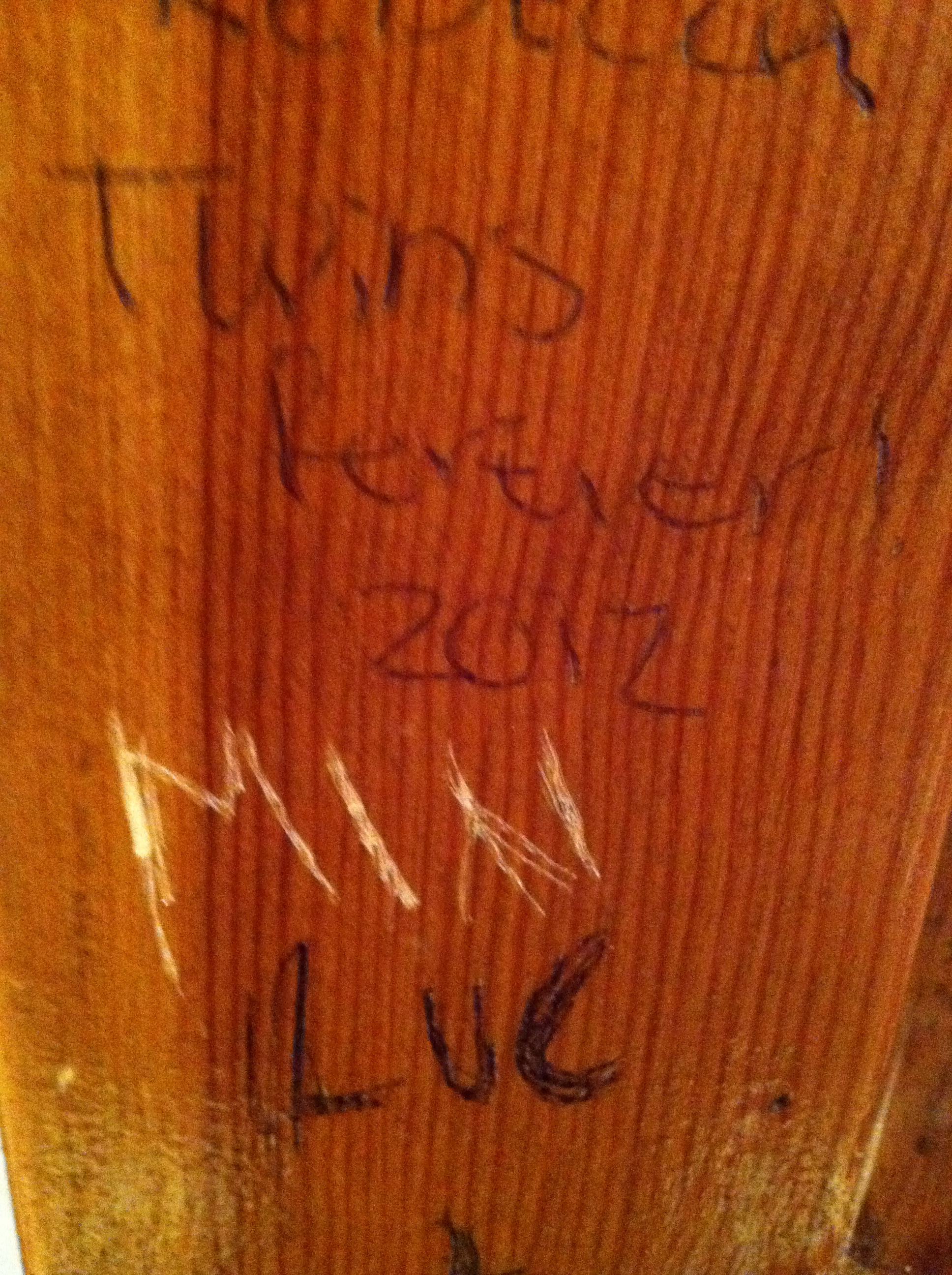
Twins Forever 2012 bathroom stall carving, Botin restaurant, Madrid, Spain

Note: This post was the first ever drafted by the MySheCave.com author using an iPad.  Drafting occurred airborne on a U.S. commercial airline flight.

While recently visiting one of the world’s oldest restaurants, El Restaurante Botin, in Madrid, I was surprised to see the message, “Twins Forever 2012,” carved into one of the old, wooden bathroom stall doors.  Being thousands of miles away from my identical twin at that moment, I was pleasantly reminded of our special twin bond.

Beyond the random bathroom stall door, I also have enjoyed reading carvings in tree wood over the years.  I remember seeing the names of local sweethearts framing a mathematical plus sign and encircled with a heart shape carved into trees in my N.C. hometown. “Jim+Kathy, 1982,” for example.

Tree carving is an old tradition, and there are interesting examples of such engravings.  Amazingly, an entire poem was carved into a beech tree in the 1840s.  “The Poem Tree,” carved by Joseph Tubb in Oxfordshire, England no longer stands, but a commemorative stone with the transcribed poem does exist, and the tree was named one of “50 Great British Trees” by Britain’s The Tree Council in 2002.

The Perryville Tree Engravings are another interesting example of tree carvings, carved on more than 100 trees in Perryville, Maryland by former psychiatric hospital patients, many of whom were mentally ill U.S. military veterans. The majority of the carved tree messages in Perryville aren’t as easy or pleasant to read as the poem on “The Poem Tree” stone or as the names of sweethearts in love.

In the spirit of today’s 2012 U.S. Open men’s golf championship, I’d like to mention another neat tree carving example.  On the grounds of his home course at the Latrobe Country Club in Pennsylvania and in honor of his father, golf great Arnold Palmer hired a local woodcarver to convert a 12-foot red pine tree into a giant carving of his father.

How many tree carvings have you seen in your lifetime?  Where were the trees that contained the carvings located?  Do you recall any specific messages?

And, last, have you ever been tempted to carve a message into a tree?  Has any person or experience moved you enough to want to carve out a long-lasting historical wooden reminder that others could find?

Watermelon Rinds and Other Delicacies

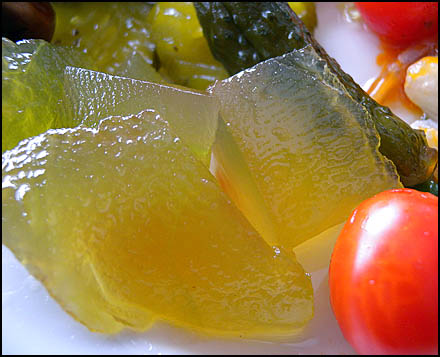
Watermelon rind pickles at The Silo Reastaurant, Greene, NY

Watermelon rind pickles at The Silo Reastaurant, Greene, NY

In a previous blog post, I asked, “Are You a Foodie?”

Now, I’d like to pose a new question:  Can you name an unusual food delicacy in your current locale?

Over this past weekend, I was reminded of a favorite Southern delicacy of mine, watermelon rind pickles, after randomly spotting a bottle of the pickles on the grocery store shelf.

I was first introduced to this southern favorite as a young child growing up in Smithfield, N.C., home of Ava Gardner and barbeque.

I recall first seeing the pickles displayed on the salad bar at Becky’s Log Cabin restaurant in the early ‘80s, and I recall initially disliking them.

Growing older, my tastes changed, and I grew to love watermelon rind pickles.  Even so, I only partake of watermelon rind pickles infrequently.  Though unusual and special, for me, watermelon rind pickles seem to be easy to forget.

It seems funny that we can forget our favorite things, doesn’t it?  But, isn’t it great to rediscover lost favorites?

Can you recall the last time you stumbled upon an item that you love but had forgotten?

And, which delicacies, food or otherwise, are unforgettable and forever emblazoned in your mind?

Paradors and B&B’s

Parador de Baiona, Spain

View from the Parador de Baiona, Spain

Are you familiar with the meaning of the word Parador?

According to Wikipedia, “a parador, in Spain and other Spanish-speaking countries, is a kind of luxury hotel, usually located in a historic building such as a monastery or castle.”

In May 2012, I had the pleasure of visiting a Parador.  The Parador I visited was located in Baiona, Spain, near Gondomar, the hometown of my husband’s father.

The Parador de Baiona was gorgeous to behold and is a unique Parador, being a former fortress that overlooks the sea.

The historic Parador buildings in Spain now converted into hotels made me recall our historic homes in the U.S. that have been converted into bed-and-breakfast establishments.

Have you ever stayed at a bed-and-breakfast in the U.S.?

If so, what advantages do you think bed-and-breakfast establishments have to offer?  And, do you have a favorite bed-and-breakfast to recommend?

I could recommend The Front Street Inn, a historic B&B located in one of my favorite places, downtown Wilmington, N.C.

But, can a B&B in the good ‘ole USA compare to a Spanish Parador?  I’d rather not compare but prefer to appreciate both.  I think I could make a better comparison if I had the chance to spend a night or two in a Parador.  I guess I need to add one more item to my bucket list.

Five and Some Change

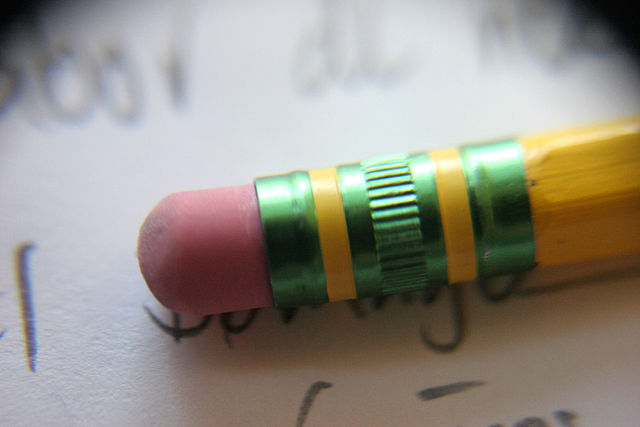
Pencil eraser image

Pencil eraser image

This post is part of a 2012 monthly series of MySheCave.com posts on the topic of the U.S. Constitution.

The state of North Carolina witnessed a historic vote this past Tuesday, as a majority of citizens voted and approved legislatively-referred Amendment 1, a ballot initiative to amend the North Carolina Constitution to define marriage as between one man and one woman.  You can read more about NC Amendment 1 on Ballotpedia.org.

What about federal amendments and changes to the U.S. Constitution?  What is the process for changing the most important document in the United States?

Article Five of the Constitution describes the process for making changes to the document.  According to Wikipedia, Article Five provides that:

“Amendments may be proposed by either two-thirds of both houses of the United States Congress or by a national convention. This convention can be assembled at the request of the legislatures of at least two-thirds of the several states. To become part of the Constitution, amendments must then be ratified either by approval of the legislatures of three-fourths of the states or ratifying conventions held in three-fourths of the states. Congress has discretion as to which method of ratification should be used. Any amendment so ratified becomes a valid part of the constitution, provided that no state ‘shall be deprived of its equal Suffrage in the senate,’ without its consent.”

Do you know which federal amendments have been unanimously ratified by the states?  The answer is:

1 – the Bill of Rights;
2- the Thirteenth Amendment (abolished slavery);
3- the Fourteenth Amendment (provided for equal protection and due process);
4- the Fifteenth Amendment (prohibited racial discrimination in voting); and
5- the Nineteenth Amendment (gave women the federal right to vote).

None of the above changes to the U.S. Constitution could have happened without the existence of Article Five.   You can read the text of Article Five here:

Article Five

Article Five

If you could change the U.S. Constitution or your state’s Constitution, what changes would you make?


Knockout Pictures or Words?

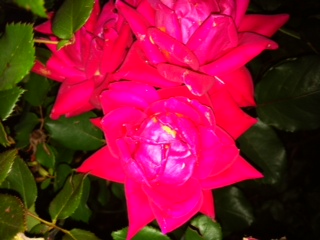
Knockout roses

Knockout roses

According to Wikipedia, a photoblog is “a form of photo sharing and publishing in the format of a blog.  It differs from a blog through the predominant use of and focus on photographs rather than text.”  The online encyclopedia also points out that photoblogging gained momentum in the early 2000s with the advent of the camera phone.

How many photoblog sites have caught your eye?  Photoblogs.org is a site that helps individuals find photoblogs.  Currently, the site lists more than 40,000 photoblogs.  And, are you aware of Andrew A. Miller’s Top 5 funny photoblogs?

Navigating through photoblogs, such as www.eleventwentyseven.com, can be fun yet time-consuming.

Speaking of time-suckers, have you ventured onto Pinterest yet?

Do you agree with the adage, “a picture is worth a thousand words?”  Or, when it comes to blogs, do you prefer words with pictures versus pictures with words?

In this post, I’m including an image of spring, captured earlier today in my front yard.   The roses are of the Knockout variety.  Again, I’d love to know if words or images or a combination of both knock you out from a blog readership perspective.