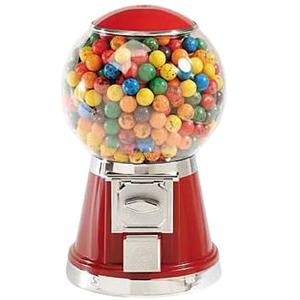
Bubble gum and Prosecco

Classic Bubblegum MachineWith all the talk of bubbles of the more negative type these days (i.e. housing market bubbles, stock market bubbles, etc.), let’s turn our focus to bubbles of a more positive nature.

Who could forget the magic soap bubbles of youth?  According to the soap bubble Wikipedia definition, soap bubbles have been enjoyed since at least the mid-18th century.

And, what about bubble baths?  Kids and adults aren’t immune to that joy.  How many of you ladies and gents have enjoyed a tube full of bubbles?  And, have you ever witnessed the bubbles generated from a bath bomb?

Then, there’s bubble gum.  Another kid favorite that many adults still enjoy.  Are you aware that, beyond popular favorites strawberry, grape, cherry and watermelon, bubble gum flavors include pineapple, peach and apple?

If asked about my favorite type of bubble, my answer would be singular yet threefold: champagne, cava and Prosecco.

All three of these sparkling wines display tiny bubbles when viewed in a glass.

Are you aware of the difference between champagne, cava and Prosecco?  Champagne is a sparkling wine specifically produced in the Champagne province of northwest France, and other sparkling wines, though identical in composition and structure, may not be referred to as “champagne,” unless those wines are made in Champagne, France.  Cava is the sparkling wine, champagne-equivalent made in Spain, and Prosecco is made in Italy and for many is enjoyed as a less-expensive substitute for champagne.

It’s fun to watch the tiny bubbles in a glass of champagne, cava or Prosecco after the cork has loudly popped and the bottle has met the glass.

What are your favorite memories of bubbles?  Tiny or large?
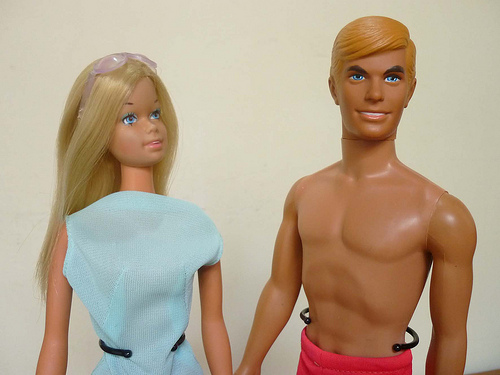


Team @BarbieStyle or Team @OfficialKen?

Malibu Barbie and KenEarlier this year, I penned a MySheCave.com post: “What’s in Your Favorites List?

When it comes to social media marketing, do you have a favorite campaign so far in 2011?

If asked the same question, I would respond with, “one of my favorite social media marketing campaigns in 2011 involved the reuniting of two of America’s sweethearts, Barbie (aka @BarbieStyle) and Ken (aka @OfficialKen).”

During 2011, the toy giant Mattel’s internal marketing staff partnered with Ketchum Public Relations to execute a fabulously fun and engaging integrated marketing campaign between mid-January and February 14 that contained multiple social components, including the use of Twitter, Facebook and YouTube accounts by the inanimate, non-real, non-human Barbie and Ken doll characters.

The campaign’s central messaging centered around the idea of the fictional Ken doll’s 2011 New Year’s resolution to win the fictional Barbie doll back, after having lost her love on Valentine’s Day in 2004.

Check out this YouTube video, which was a one of the social components of the campaign, and read the Mashable business article, “How Barbie & Ken Were Reunited by Social Media” to learn more.

The reason why this campaign makes my favorite social media marketing campaign list is because of the blatant statement the campaign sent to America about the significance of social media marketing today.

Let’s face it… if two of American children’s most beloved toys, the Barbie and Ken dolls, are involved in social media, then aren’t we all?

At the least, Mattel’s campaign revealed that social media channels are almost inescapable by our youth today.

So, what do you think about the impact of social media marketing on our society today?  And, if you had to pick a side, whose team would you join?  Team Barbie or Team Ken?

Are You a Foodie?

Foodie BagIn the spirit of the recent food-filled Thanksgiving holiday here in the U.S., I’d like to raise a question:  have you ever known a Foodie?

According to Wikipedia, Foodies are a distinct hobbyist group whose “interests and activities include the food industry, wineries and wine tasting, breweries and beer sampling, food science, following restaurant openings and closings and occasionally reopenings, food distribution, food fads, health and nutrition, cooking classes, culinary tourism, and restaurant management.”

If you consider yourself an aficionado of food or drink and would like to join the ranks of Foodies worldwide, you are not alone.

The Web currently offers thousands of Foodie-related sites, forums and blogs to help individuals seeking to gain the status of “Foodie.”

For example, according to VeryGoodRecipes.com, there are more than 11,000 food blog sites available in English, and more than 180 food blogs are currently displayed on the world map of food blogs.  There’s even foodieregistry.com in the U.S., a wedding registry for restaurant gift certificates.

But, is being a Foodie all that it’s cracked up to be?

According to the Adventurous Tastes Atlanta-based blog, the hobby of Foodies can be considered competitive.   Also, be prepared as a Foodie to be labeled by some as an elitist.   If you need ammunition to make the point that Foodies are not elitists, you can reference this April 2011 Washington Post article.

With the Christmas season approaching here in the U.S., it’s great to know that many Foodies are also philanthropists, providing food to those less fortunate around the globe.  A great example is the Australian-based site, The Philanthropic Foodie.  You can follow them on Twitter at @FoodieOrgAu.

So, are you a Foodie?  If so, please let me know.  I’d love to know which are your favorite “Apps for Foodies” in the Apple App store.

Dialing to Create a Blog

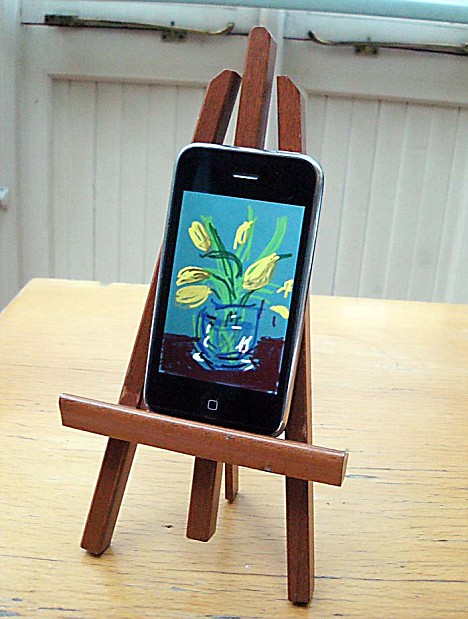
David Hockney's iPhone art

David Hockney's iPhone art

What do you think of when you think of phone art?  Do you think of Web sites like phoneart.com that sell cell phone faceplates and accessories?

Have you seen examples of artwork from cell phone artists who have creatively incorporated cell phone images into paintings or drawings or actual cell phones or parts into structural works of art?

In 2009, celebrated U.K. artist David Hockney began using his iPhone to paint.  And, in 2011, a Pittsburgh based artist T. Foley showed the world how cell phone ring tones can be used to create art via her Locally Toned website project.

The late artist Lloyd Skidmore III of Raleigh, N.C., experimented with a different kind of phone art.  Skidmore would physically call individuals, sometimes friends, sometimes strangers, and then ask, “What are you doing right now?”  Depending on their answers, Skidmore would immediately begin painting “in the moment” portraits of them as he envisioned.

Do you think Skidmore’s phone art approach could be applied to blog writing?  Here’s my attempt:

November 20, 2011 phone call to a friend:

My question:  What are you doing?

Her answer:  I’m doing my hair, and, a little later, I’m going to walk down the street to welcome some new neighbors at a drop-by party.

My immediate translation into blog art in poetry form:

Waiting

As she sat waiting for her hair to curl,
her thoughts drifted not ahead, but back. 

Back to the memories and
back through the years.

Back through her trail of
joys and tears.

Where are those moments?
Where is the time?

Where are my pearls, and
where is the wine?

I’m not convinced that Skidmore’s phone art creative approach can successfully be applied to blog writing, but it was fun to explore the technique.  What do you think?  Please let me know if you dare to dial and draft!

Cleopatra and the global mobile world

Cleopatra PaintingAdornment.  When you hear this word, what images come to your mind?

According to Wikipedia, an adornment is “generally an accessory or ornament worn to enhance the beauty or status of the wearer…usually colourful, and worn to attract attention.”

Throughout history, there are plenty of examples of individuals who have adorned themselves – from Egyptian Queen Cleopatra and her earrings, to the Kayan women with their neck rings, to military leaders with their medals and to popes with their robes and Iron Crosses.

What about modern adornments?  What examples would you give?  Earrings, rings, bracelets, scarves, tattoos, maybe?

Considering the latest global mobile statistics, one could argue that mobile devices, besides being productivity tools, are becoming the most prevalent modern adornment for millions of individuals worldwide.

And mobile devices are adornments that can be further adorned.  For example, popular mobile applications such as Pandora or Angry Birds serve to embellish mobile devices.  And don’t forget about the plethora of opportunities to enclose your mobile device with bling.

As more and more mobile devices penetrate modern society, chances are that mobile devices, regardless of apps installed or fancy wrappers, will lose their characteristic of adornment.  Owning a smartphone or tablet device will be commonplace and will not enhance the status of the owner.

When we reach the complete saturation point in terms of mobile device adoption in the global society, can you imagine future adornments that will replace mobile devices?

What about using your words, ideas and actions to distinguish and adorn yourself?

And, why not start now?

Old marathons and new illustrations

illustrated runner's legs and feetAccording to Wikipedia, illustration is a “displayed visualization form presented as a drawing, painting, photograph or other work of art that is created to elucidate or dictate sensual information by providing a visual representation graphically.”

The Wikipedia entry further highlights the fact that the earliest forms of illustration were prehistoric cave paintings and that the “golden age of illustration” occurred between the 1880s and the conclusion of World War I in 1918.  The entry concludes by pointing to the fact that there is a growing interest today in collecting original illustrated artwork.

Though illustrators still exist in the U.S. today, illustration is considered a form of media whose time has, in the majority, already passed.  However, today, November 6, 2011, has offered up a challenge to that belief.

The New York City Marathon was held in New York today.  One of the participants was Christoph Niemann, an illustrator and author of “Abstract Sunday,” a column for the New York Times Magazine, who proved that illustrations can still be timely and relevant.

While participating in the race, Niemann simultaneously captured his race experience through illustrations and tweeting via his Twitter handle, @abstractsunday.  Here are two examples of Neimann’s real-time race tweets with illustrations:

It was nice to witness Neimann’s successful melding of old and new media forms today.

Do you think this sort of melding of forms is the answer when it comes to preserving “dying” art forms? Which other older forms of communication do you think can be kept alive via incorporation into new media channels?  I’d love to see more examples.

Also, who are your favorite illustrators?

What’s in Your Favorites List?

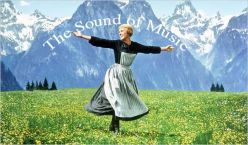
The Sound of Music movie imageMany individuals throughout the world are familiar with the 1959 Rodgers and Hammerstein Broadway musical, The Sound of Music.

Several of the songs performed in The Sound of Music have become standards, including one of the most popular tunes in the musical titled, “My Favorite Things.”

“Raindrops on roses and whiskers on kittens, bright copper kettles and warm woolen mittens” are instantly recognizable lyrics that have delighted countless fans throughout the years — children and adults alike.

For example, have you ever listened to John Coltrane’s near fourteen-minute version of “My Favorite Things” on his album of the same name?  In 1961, having been inspired by the original “My Favorite Things,” Coltrane released his version of the song, which became a jazz classic.

Ironically, a song with lyrics about one individual’s list of favorite things is likely now listed on thousands of individuals’ lists of favorite things.

It’s refreshing when individuals can clearly and easily define those things that they believe in and hold most dear.

Who could forget the famous “I Believe” speech that Kevin Costner made while playing character Crash Davis in the 1998 film Bull Durham?   As Susan Sarandon as Annie in the movie replied, “Oh, my!

Knowing your likes and dislikes is a key exercise for reinforcing self and individualism.  However, it’s important to be aware that announcing your preferences to the world can, by default, associate or segment you into a larger group of individuals who share your preferences.

Think about the last time that you “Liked” an organization’s Facebook Fan page.  Did you happen to notice new advertisements promoting content similar to that organization’s mission and services popping up in the ad section of your Facebook Profile page in the following days?  Without doubt, marketers today are focused on your preferences and the groups to which you belong.

So, the next time you publicly list your favorite things, you may want to ask yourself, “Who else likes these same things?” and “Which groups am I now a member of?”

Sequins, trademarks and you

Wikipedia defines a trademark as a “distinctive sign or indicator used by an individual, business organization, or other legal entity to identify that the products or services to consumers with which the trademark appears originate from a unique source, and to distinguish its products or services from those of other entities.

Having a trademark voice could earn you millions.  Just ask Elton, Sting, Rod or Bette if you want proof of that fact.

At a minimum, trademark style can get you noticed.  Consider British-born American Vogue editor-in-chief Anna Wintour and her trademark, oversized sunglasses.  She’s instantly recognized at fashion shows when wearing them.

And, who could forget former U.S. Secretary of State Madeleine Albright’s collection of pins?  Albright has stated that each pin she wore while serving as Secretary of State conveyed a special message for those with whom she encountered.

According to Wikipedia, the concept of “personal branding” began in 1981.  Without doubt, the act of self-positioning by individuals worldwide seems to be more popular than ever in the mainstream culture today.  For example, how many times have we heard young artists like Taylor Swift utter phrases like, “I’m focused on building my brand.  I want to be around for the long haul.”

Do you have a personal trademark or style? By chance, do you have a trademark smile?  What feature or features of yours make you distinct as an individual?  And, how important do you think it is to stand out and apart from other individuals in the world?

If you don’t give your personal brand any thoughtful consideration, will others?  Maybe it’s time to reconsider the personal impressions that you’re making on the world.  In fact, it might be time to go buy that new hat or maybe a white, sequined glove.

The extraordinary ordinary you

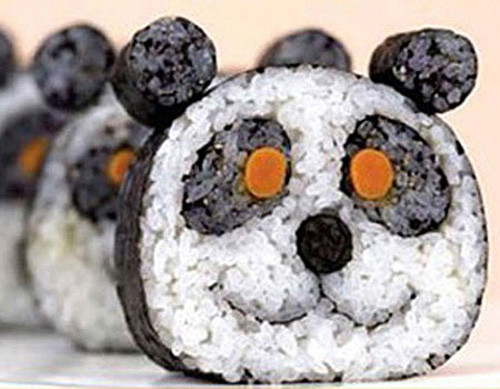
Sushi Panda

Sushi Panda

Merriam-Wester.com defines extraordinary on first reference as “going beyond what is usual, regular, or customary.”

It’s interesting to see examples of instances where inanimate, ordinary objects become extraordinary.

For example, during the month of October here in the U.S., the pumpkin, a simple, gourd-like squash, becomes extraordinary when carved in connection with the national Halloween holiday.  When carved, a regular pumpkin can be transformed into a jack-o-lantern.

And, what about ice carving?  Ice sculptors take frozen water and translate it into myriad fluid pieces of art.

Have you ever seen food become extraordinary?  For example, simple sushi roll ingredients can be rearranged in such a way that a “sushi panda” can appear.

Rearranging food ingredients, carving ice and carving pumpkins requires an effort.

Do you think that effort is always required for things to “go beyond” and become extraordinary?  If so, is that the same case where individuals are concerned?

What does it take to become an extraordinary person in this world?  Does becoming extraordinary require an extra effort?  Or, is each ordinary individual already extraordinary at birth?

Do you think of yourself as ordinary?  Take the time to consider what have been the most extraordinary moments of your life so far.  Discover what is extraordinary about you.  It’s not too hard to find the extraordinary inside yourself, if you’re looking.  As Carly Simon once sang in her “The Stuff That Dreams Are Made Of” tune, “Don’t look at yourself in the same old way.  Take another picture.”

How are you handling Twitter?

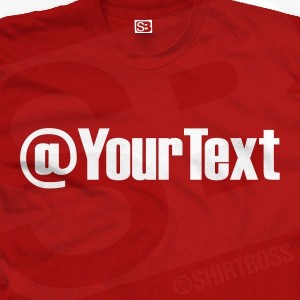
Twitter Handle shirtDo you have a Twitter handle (ex. @RuthDobson)?  Have you ever tweeted?  Do you understand the meaning of the word hashtag?

With an estimated 200 million+ global users, Twitter is an online social networking platform of which you’re most likely already aware.

The Trends functionality within the standard Twitter profile allows users to see discussion topics in virtual real-time that are trending and most popular among other users located in different geographic locations around the world.  Basically, the Trends function allows you to quickly and easily discover sentiments of others related to current world events and global happenings, as well as countless past, present and future-related ideas and items of interest.

For example, after selecting the “Worldwide” setting within the Trends function, I discovered that the following topics were most popular among users tweeting earlier today, October 8, 2011:

#Yaris
#CosasQueNoPuedoEvitar
#BiggestLoserFinale
RIP Al Davis
GREYSON IS THE INSPIRATION
#9DAYS
UNBROKEN TOUR IN BRAZIL
Congrats LarryJEDWARD WOW OH WOW
PROUD OF 1D

Do any of the above hashtags or phrases peak your interest enough to search Twitter to learn more?  Or, would you be more interested in seeing topics that were or are trending in your local neighborhood?

Apple co-founder Steve Jobs died three days ago, and millions of global Twitter users have expressed their reactions to Jobs’ passing via tweets.  Searching the hashtag, #stevejobs, on Twitter today reveals the continued sentiments of many organizations and individuals in tweets, such as:

BrooklynBrewery The Brooklyn Brewery
Paying our respects to a man who changed the world bit.ly/qwQpdb #stevejobs

CathySal
Cathy Salazar
Retweet if you are touching an Apple product #SteveJobs #iSad

Tweet_Dec
Declan Cashin
Gawker: What everyone is too polite to say about #SteveJobs gaw.kr/rqD5xV

beppe_grillo
Beppe Grillo
[Commento] 10 years ago we had #SteveJobs, #BobHope and #JohnnyCash. Now we have no Jobs, no Hope and no Cash goo.gl/EvYkI

swoldhek
Siegfried Woldhek
A portrait of #SteveJobs. The man with golden eyes http://ow.ly/6RccO

eorlins Eliza Orlins
Walking by the #apple store at 14th street. Moved by the tribute to #SteveJobs. twitpic.com/6wody1

yoanifromcuba Yoani Sanchez
#Cuba I was born in a society where talent and desire to innovate can be politically penalized . But you inspired me #stevejobs

NewYorker The New Yorker
Steve Jobs was a great businessman. But was he a great artist? nyr.kr/o1VesB #SteveJobs

Maybe the most appropriate question to raise is not the question, “Do you have a Twitter handle?”    Maybe a better question is, “Are you using Twitter to search out different perspectives and discover different worlds?”