What Are You Searching For?

Google search image

Google search image

When was the last time you searched for information online using Google’s search engine?  Yesterday?  One hour ago?  Thirty minutes ago?

Considering recent Statisticbrain.com stats on the average number of Google user searches that occur daily and annually, no doubt, it’s likely that you’ve used Google’s search engine recently.

Marketers today who are focused on search engine optimization (SEO) want to know your search behavior.  The more SEO-savvy are using free and paid online tools to discover the actual keywords that you’re choosing to type into the Google search box when you’re trying to locate the information that you’re seeking online.

For example, the Keyword Tool inside Google Adwords can be used by marketers to reveal that North Carolinians who are searching for information about the upcoming North Carolina State Fair event are actually typing in keywords such as, “NC state fair,” or, “state fair,” when conducting their online searches.

Have you ever noticed the auto population feature of the Google search engine?  When you begin to type specific search terms into the Google search box, you will automatically see several suggested search terms that represent the most commonly used search terms of other users in your surrounding geographic area.

Even if you’re not a marketer by trade, you can use Google’s auto population feature to discover the most common types of information that those around you are seeking.  How?

Try conducting a simple A-to-Z letter search approach.  Simply go to the Google search box and type the letter, “a,” and look at the automated suggested search terms.  Then, do the same for the letter, “b,” and the following letters in the alphabet. It’s a fun exercise.

I must confess, the other day, I used the A-to-Z letter search approach and found the results to be fascinating. For example, when I typed the single letter, “c,” into the Google search engine box, I saw the below auto populated search term suggestions:

  • confessions of a CF husband;
  • confessions of a homeschooler;
  • confessions of a dangerous mind;
  • confessions of a shopaholic;
  • confessions of a glamaholic; and
  • confessions of a cookbook queen.

Typing the letter, “d,” yielded these associated search suggestions:

  • dictionary;
  • delta;
  • durham bulls; and
  • dominoes.

As a blogger, I appreciate how this A-to-Z letter search approach can be a great tool to find content ideas that are current, relevant and popular for inclusion in future posts.

If you’re not a marketer or blogger, then learning the search habits of others may not be one of your primary concerns.

At the least, I hope the subject of this post reminds you of one of life’s truths:  sometimes when you search, you can find more than you’ve ever dreamed.

Real or Replica?

helenalloydart.com replica image of The Three Graces

helenalloydart.com replica image of The Three Graces

While walking the galleries inside the Museo Nacional Del Prado in Spain in May, I stumbled upon “The Three Graces.”

Ironically, while standing in one of Europe’s most famous houses of art and viewing an authentic 17th-century piece, upon seeing “The Three Graces” painting, I was immediately transported back home to North Carolina and to a 20th-century reproductive work of art.

I remembered a wall tapestry titled, “The Dance,” that was purchased by a friend of mine after her visit to the Biltmore Estate in Asheville back in the 1980s.  My friend’s wall tapestry similarly features three female subjects and replicates the style of the authentic 16th-century Flemish wall tapestries that still hang in the Tapestry Gallery room inside the Biltmore House.

What is your opinion of replicas of art?  Do you think a reproduction can evoke as much feeling and response as an original?

In her “Art Reproduction: Is It As Good As the Original?” blog post, Anouska Hudovsky, founder of Fabulous Masterpieces, a UK premier art reproduction company, argues that reproductions can be as good as the original in certain cases.

A grand example of the replica versus authentic question can be seen in the massive hotels along the Las Vegas strip.  For example, you can see a replica Eiffel Tower at Paris Las Vegas Hotel & Casino, and you can see replicas of statues of Roman gods and replicas of paintings from Rome in the lobby of the Caesars Palace hotel.  If you’ve never traveled to Paris or to Rome, maybe the Vegas reproductions mean as much or more to you than if you’d witnessed “the real thing,” but, maybe not?

Again, I’ll ask:  what do you think of replicas of art, and do you hold any bias towards original works?

For some reason, when I consider the question, I keep hearing Marvin and Tammi singing these words of wisdom: “Ain’t Nothing Like the Real Thing.”

Finding Favor in Fear

Wikipedia shark image

Wikipedia shark image

Psychologists often advise individuals who are suffering from phobias to confront and embrace their fears in order to overcome them.

Have you ever followed that advice?  When was the last time you confronted something that you fear?

Ever since watching the 1975 movie, Jaws, I’ve maintained a fear of sharks.  Besides trying grilled shark meat at a restaurant once, I admit that I haven’t taken too many steps to get “up close and personal” with any sharks.

National and local news coverage of shark attacks hasn’t helped assuage my shark fears, but one recent bit of shark-related news has helped me to appreciate sharks more. Have you heard of Sharklet Technologies?

The company produces a surface that is inhospitable to the powerful bacteria that are resistant to many of our drugs today.  The surface is called Sharklet™ and is “comprised of millions of tiny diamonds arranged in a distinct pattern that mimics the microbe-resistant properties of sharkskin.”

Sharklet, patterned after sharkskin, is being added to hospitals, childcare centers, daycare centers, public bathroom and fitness facilities to make them less bacteria prone and safer.  Check out this video on Sharklet Surfaces to learn more.

After hearing the news about Sharklet surfaces, I appreciate sharks more, but I still wouldn’t call myself a huge fan of the fish.

What about you?  When was the last time you tried to discover something good in an object of your fear?

When Love Means Nothing

Tennis Balls in Heart Shape

iStock image of tennis balls in a heart shape

Kudos to USOpen.org for offering a free live video stream of today’s men’s semifinal tennis match between David Ferrer of Spain and Novak Djokovic of Serbia at the 2012 U.S. Open Tennis tournament.

Most of the free cable television sports channels highlighted football versus tennis today, the official start of the NFL football season.

A new-to-tennis friend recently asked me the question, “why is zero called ‘love’ in tennis?”  Do you know the answer to that question?

According to Wikipedia’s “tennis score” definition, the origin of the use of “love” for zero in tennis is disputed.  Wikipedia offers four possible explanations:

  1. “It is possible that the use derives from the French expression for ‘the egg’ (l’oeuf), because an egg looks like the number zero.”
  2. “‘Love’ is also said to derive from l’heure ,‘the hour,’ in French”
  3. “A third possibility comes from the Dutch expression, ‘iets voor lof doen’ which means to do something for praise, implying no monetary stakes;” or
  4. “The use of ‘Love’ comes from the acceptance that, at the start of any match, when scores are at zero, players still have ‘Love for each other.’ ”

What do you think of the four suggested explanations above?  One Yahoo user has offered an alternative, fifth theory, suggesting that the use of “love” for zero in tennis is tied to the 17th-century expression, “play for love,” which meant, “to play without any wage, for nothing.”

This fifth theory certainly seems to be the most romantic of all of the suggested explanations with its love-means-more-than-money, “Money Can’t Buy Me Love” sort of air.  Would you agree?

When was the last time that you put your heart and soul into an effort without expecting a monetary gain?  And, was love the motivational source behind your effort?  Also, what wages have you reaped from the love that you’ve shown while living your life so far?

If you’re a tennis fan, you can show your love for your favorite players in a no-cost way – follow them on Twitter.  Which players?  Check out Bleacher Report’s recent article, “Tennis on Twitter: 25 Players You Have to Follow.


Finding Career Inspiration in a Nutshell

thehealthyapron.com's image of mixed nuts

thehealthyapron.com’s image of mixed nuts

If you’ve already read Daniel H. Pink’s book, Drive, then you’re probably aware of his career advice to deemphasize focus on finding passion in your work and focus more on “doing” your work.

Do you agree with Pink’s advice when it comes to finding passion in your work?

Have you given up the drive (pun intended) to find passion in your career endeavors, or, are you still seeking assignments that light a personal flame within?

After working in marketing for almost 20 years, I’m still excited about the business function of marketing and am still finding excitement and passion in my work.  I tend to agree less with Pink on the topic and more with Ralph Waldo Emerson who once said, “Nothing great can be accomplished without enthusiasm.”

Sometimes you can rediscover and stoke the flame of career passion by listening to the inspirational words of team members and industry colleagues.  Just today, for example, my excitement and passion for social media marketing was flamed by a self-proclaimed nut – a social media nut, that is!

To whom am I referring?  Pam Moore is the woman who refers to herself as a “100% social nut.”

After watching Pam’s concise and engaging TweetChat video tutorial I was reinvigorated about using new social media tools, like TweetChat, and participating in new digital marketing channels.

What about you?  When was the last time someone inspired you about your job and specific career participation?  Who was that person, and did you thank them?

This post serves as my thank you to @PamMktgNut.


Now Appearing on Bank Notes

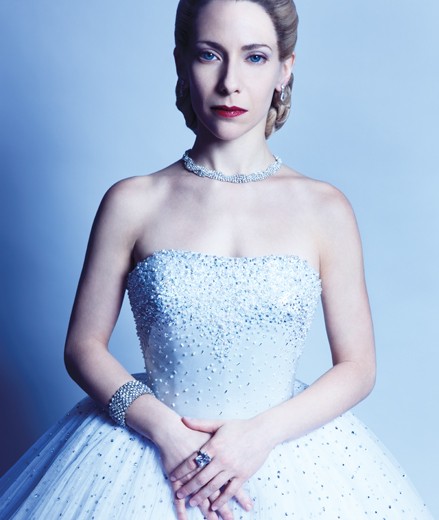
The Daily Beast image of Elena Roger as Evita

The Daily Beast image of Elena Roger as Evita

Ava.  Considering my hometown is the same as the famous former Hollywood actress Ava Gardner, I might be expected to write about Ava.  Today, however, I want to mention another former actress with a similar sounding and spelled name, “Eva.”

I’m referring to Eva Duarte de Perón.  How much do you know about the former first lady of Argentina?

I recall first studying Eva and Juan Perón during a Latin American history class at the University of North Carolina at Chapel Hill.  My professor was from Chile — Castillo was his last name.  There, in Chapel Hill, in the spring of ’93, I learned about the complicated history of Juan and Eva Perón, who was known affectionately as “Evita” by thousands of Argentines.  I learned that while the working-class “descamisados” viewed Eva as a saintly woman, countless others, such as members of the military and bourgeoisie, were not Eva fans.

While working at IBM in the ’96 timeframe, I became friends with a beautiful, kind coworker and Argentine woman named Nieves.  I recall asking Nieves about her view of Eva Perón and was fascinated to hear her tell a story of a poor family with whom she was acquainted who had been gifted a house by Eva Perón, after Eva met that family when one of their children was in the hospital.   I remember Nieves telling me that the family still owned the house and that the house was located in a section of Buenos Aires known as “Evita Village.”

Whether fan or not, one can recognize that Eva Perón impacted the lives of many in Argentina and throughout the world.   Just last month, Eva’s continued impact in Argentina evidenced itself as the current President of Argentina, Cristina Fernández de Kirchner, announced that the image of Eva would appear on the new 100-peso note, making Eva Perón the first woman to appear on Argentine currency.

Learning about Eva’s upcoming appearance on Argentina’s currency made me wonder about how many women have been represented to date on U.S. currency.  For example, did you know that Martha Washington was solely featured on the $1 bill in 1886 and that the only other woman to appear on U.S. paper currency was Pocahontas in 1865?  Are you aware that no U.S. women appeared our paper currency during the 20th century?   Last, do you have a suggestion for which woman in recent U.S. history deserves to be recognized with representation on U.S. currency?

Getting back to actresses and Eva Perón, earlier this year, Elena Roger became the first Argentine actress to portray Eva on Broadway in the long-running Andrew Lloyd Webber and Tim Rice musical titled, “Evita.”  I hope to catch Elena’s performance in the role.  Until then, here’s a “cry-out” to history-making, inspirational women like Elena and Eva.

Forget Grey, We’re Talkin’ Shades of Green!

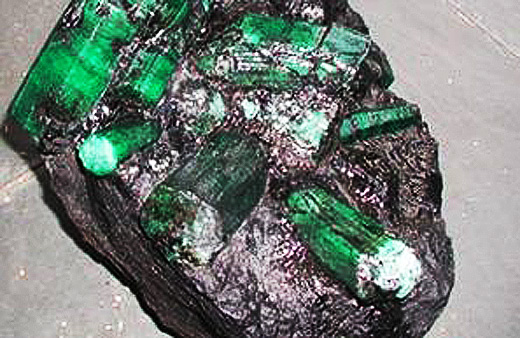
400-million-dollar bahia emerald image as shown on starlanka.com

Unless you’ve had your head buried in the sand over the summer, you’re most likely aware of the heavily publicized book, 50 Shades of Grey.  Are you aware, however, of the book, Shades of Green?

Unlike the fictional 50 Shades of Grey, Shades of Green: The Bahia Emerald Story is a true-life story centered around two men’s efforts to gain ownership and possession of one the largest and most valuable emeralds in the world known as “the Bahia Emerald.”

Have you heard of the Bahia Emerald?  The gemstone was originally mined in 2001 in Bahia, Brazil, weighed 840 pounds, contained 180,000 carats and was appraised at $372 million US dollars.

In January 2012, the National Geographic Channel aired a video story about the emerald’s discovery, its mysterious 10-year journey to the US and the legal dispute that’s still underway regarding its ownership.  The story of the rare and famous Bahia Emerald is without doubt intriguing and exotic.

What about gemstones of a more local variety?  Have you ever had the opportunity to see an uncut emerald that was mined in a location near you?

Two weekends ago, I had the pleasure of visiting one of North Carolina’s gems – the Nature Research Center wing of the N.C. Museum of Natural Sciences.  While there, I saw the “Underground North Carolina” exhibit that included several uncut emeralds that had been mined in the western part of N.C. on display behind glass.

According to the museum, North Carolina is the only state where the four most valuable gems – emeralds, rubies, sapphires and diamonds – have been found.  So, if you live in North Carolina and if you’re lucky, in addition to uncut emeralds, you may get the chance to see uncut N.C. rubies, sapphires and diamonds one day.

Throughout history, whether uncut or cut, gemstones have held charm and fascination for many people.  What about you?  Are you fascinated by gemstones?  Do you have a favorite gemstone?

I already happen to know several girls with a best friend whose name starts with a “D.”

Is Your Marketing Content Cooking?

Crock-Pot manual slow cooker image

Marketers today are challenged to create valuable content that can be distributed through traditional print and Web mediums as well as newer social media channels.

For example, the authors of the book, Content Rules, advise: “But why not steer your marketing to another level?  Why not create value?  Why not provide your customers with a steady flow of high-value content that, as marketer Len Stein describes, is ‘paced with utility, seeded with inspiration, and that is honestly empathetic‘?”

Are you aware of organizations who are successfully leveraging today’s marketing channels to provide their customers with useful and valuable information?

One success story that I’d like to mention when it comes to content creation and distribution is a favorite of mine for a couple of reasons: 1-The founders of the organization are two women; and 2-Both of the women founders live in small towns.  Like singer-songwriter John Mellencamp, I’ve “got nothing against a big town,” but, since I was born in a small town, small towns for me will always have a certain lure and small town successes will always have an appeal.

Have you heard of “The Crockin’ Girls“?  In 2011, small-town Texas dwellers Nicole Sparks and Jenna Marwitz started an American revival of slow cooking by distributing timesaving, helpful Crock-pot recipes online to busy mothers across America.  Within two weeks of debuting their initial Facebook presence, their Facebook site went viral and received over 500,000 “Likes.”  Listen to this video to hear Nicole and Jenna describe the phenomenon that took place back in August 2011.

Why has The Crockin’ Girls’ online success been so incredible?  Did Nicole and Jenna hire an excellent digital marketing agency to support their marketing communications needs?  Possibly.  However, it’s more likely that, regardless of any professional marketing support attained, Nicole and Jenna have achieved online marketing success by, as Jenna stated in the video, “meeting a need for many, many people.”

The slow-cooking-related information that Jenna and Nicole regularly maintain and share online helps simplify the lives of their website visitors, Facebook fans, and Twitter and Pinterest followers.  In a nutshell, or maybe I should say, “in a Crock-pot,” Nicole and Jenna have figured out the way to successfully match specific, valuable content with an audience in real need of that content.

Again, are you aware of other organizations who have figured out the content creation, management and distribution puzzle?  If so, please share those examples with me.  Or, if you’re unaware of such an organization, feel free to simply pass along your favorite recipe for the slow cooker!

Be My Guest, Blogger

Welcome Mat

Welcome Guest Blogging

For those of you out there trying to improve your Web site’s organic search rankings and optimize your Web site for SEO, consider guest blogging strategies.

Guest blogging is a fantastic way to naturally build your organization’s brand visibility and organic search rank on search engine sites.

So, what is guest blogging?  In this Koozai video, James Perrin explains that guest blogging occurs when a website’s owner publishes content on his or her website that is written by someone else.  According to Perrin, key benefits include:

1-    Enhanced visibility of your site’s content;

2-    Enhanced social sharing of your site’s content (your content will most likely be shared, and social sharing is a huge ranking factor with SEO);

3-    Relevancy and quality of Web sites – when guest blogging, you write for sites that are of high relevancy and quality for your industry, which will pass authority onto the link that you’re trying to optimize;

4-    Page Link – you’ll be writing for Web sites that have a higher page rank than those links found on blog spinning sites; and

5-    Enhanced PR, branding and marketing for your site via enhanced exposure.

Where can you find guest blogging opportunites?  Perrin suggests sites like Guest Blog It but also suggests sourcing on your own.

In this MySheCave.com post, I’m taking a different spin with guest-blogging.  I’ve  invited a guest blogger, with pen name Josifina O’Brien, to co-write the remainder of this post.  Here is Josifina’s contribution:

Have you ever read an amazing book and then gone to see the movie adaptation and found that the adaption has missed all the key points and details of the book?  Or, have you ever had the book become real at the movies, down to the very color of the characters’ hair?

Movie adaptations of popular books are a common thing to see at any movie theater but that doesn’t mean audiences appreciate how their favorite books were adapted. The magic of the movies is really highlighted when a movie adaptation turns out right.  Here are some of my examples of book-to-movie adaptations that turned out right:

 1. Gone With the Wind

2. The Chronicles of Narnia: The Lion, Witch, and the Wardrobe

3. The Notebook

Of course, there are adaptations that bomb…completely. Here are some movies that I am aware of that really missed the mark:

1. The Da Vinci Code

2. How the Grinch Stole Christmas

3. Percy Jackson & the Olympians: The Lightning Thief

In some cases, the result is divided.  Everybody has an opinion and, in these cases, no one can agree…bad or good?

There is one debatable movie that no one can agree on, including myself. The book/movie is The Hunger Games.  The question I have for you guys is, is the book better than the movie, or is the movie better than the book? 

Guest blogger Josifina O’Brien is a 13-year-old young lady who lives in the Equality State, U.S.A., home of elk, bison and former Vice-President of the U.S., Dick Cheney.  Besides guest-blogging, Miss O’Brien enjoys reading, downhill skiing and paddle-boarding during her spare time. 

Chicken, Cows and the Constitution

Chick-fil-A brand ad image

Chick-fil-A brand ad image

This post is part of a 2012 monthly series of MySheCave.com posts on the topic of the U.S Constitution.

Want another example of how U.S. Constitution-related issues surface in our everyday lives?

This week, Dan Cathy, President and COO of one of America’s most famous fast-food chains, Chick-fil-A, made comments in the press that have been interpreted by some as against same-sex marriage, raising a controversy among gay rights activists and politicians.

In response to Cathy’s comments, three big-city mayors, Thomas Menino (Boston), Rahm Emanuel (Chicago) and Edwin Lee (San Francisco), publicly stated that they disagreed with Cathy and would discourage the presence of Chick-Fil-A establishments in their cities.  For example, Emanuel stated, “Chick-fil-A values are not Chicago values,” and Lee tweeted, “Closest #ChickFilA to San Francisco is 40 miles away & I strongly recommend that they try not to come any closer.”

So, how does this controversy relate to the U.S. Constitution?  Well, the controversy has raised questions related to our rights to freedom of religion and speech — both of which are rights guaranteed by the First Amendment of the Constitution.

Specifically, Amendment I “prohibits the making of any law respecting an establishment of religion, impeding the free exercise of religion, abridging the freedom of speech, infringing on the freedom of the press, interfering with the right to peacefully assemble or prohibiting the petitioning for a governmental redress of grievances.”

New York City Mayor Michael Bloomberg has publicly disagreed with Menino, Emmanuel and Lee by stating, “trampling on the freedom to marry whoever you want is the same as trampling on your freedom to open a store.”

What do you think?  Do you agree that a COO of a privately-held company like Dan Cathy has a Constitutionally protected right to state his beliefs about gay marriage?  And, do you think that city mayors, like Menino, Emanuel and Lee should have the power to prevent a restaurant like Chick-fil-A from opening in their cities based on the religious-based statements made by that restaurant’s COO?

On a lighter note, I have a question for all of you marketers out there:  what do you think of Chick-fil-A’s 17-year-running renegade Cows brand advertising campaign?