The Knowledge Timer is Set to On

Coleman Yard Stake with Outdoor Mechanical Timer

Coleman Yard Stake with Outdoor Mechanical Timer

Christmastime dilemma:  last year, you bought a fantastic timer to control exactly when your outdoor Christmas lights would turn on and off.  This year, you’ve located the timer and the outdoor lights, but you can’t remember how to work the timer and can’t find the timer directions.

What can you do?  Google the answer, of course (I know a certain married couple who actually solved this same dilemma yesterday by doing so).

It seems that answers to holiday questions and myriads of other question types are only a few clicks away in our modern mobile computing age.

But, can you remember a different time when information wasn’t so readily available?

In the late ‘70s and early ‘80s while growing up down South, I can remember how access to certain information was hard to reach.  For example, there were only a couple of ways that my sisters, mother and women friends of ours could gain access to knowledge about the latest “New York fashions.”  We could watch the daily wardrobe changes of TV soap opera characters like Erica Kane, try to catch Elsa Klensch’s fashion segments on CNN or take actual trips to NYC itself, which we occasionally managed.  With our limited access to related information at the time, the fashion world in NYC and other global cities like Paris seemed so exotic.

This year, when I accessed actual New York Fashion Week runway segments directly on my computer via Live Runway, I had to smile inside, imagining how excited I would have been as a teenage girl with that kind of direct access to the latest trends in global fashion.

No doubt, computer technology has helped to democratize our access to all types of information, fashion-related and otherwise.

My question is:  now that so many of us have more access to the information that we seek, what are we doing with our enhanced knowledge?

What about you?  What kind of once-hidden information has today’s technology provided to you, and how are you using the new information that you’ve learned?

Last, in this age of Big Data and in these days of information deluge, what critical information do you think remains hidden?

How Memorable is Your Memory?

String Around Finger When was the last time that you gave thought to the things that you’ve committed to memory?

Often the facts that we commit to memory serve to protect us.  A red light means stop.  A green light means go.  Don’t touch a hot stove.

Many times we remember facts for fun (you can’t win a poker game if you don’t know the rules, right?).

Some memories serve as teachers.  We sometimes recall factual situations that we don’t wish to repeat in the future.  Lessons learned, so to speak.

And, then, there are those memories that sustain us.  For example, how many soldiers at war have held on to the memories of loved ones as incentive to keep on fighting until the day that they’re able to return home?

Some have said that the ability to imagine is a gift.  What do you think about the ability to remember?  Do you consider memory to be a blessing?

And, how would you categorize your memories, if asked?  Which are your favorite memories?

Call me a romantic, but the memories that I cherish the most are those that I’ve shared with loved ones.

The Bacon Brothers speak to the desire to remember the one you love in their beautiful song, Memorize.

Listen as they sing, “let me memorize you,” and the rest of the lyrics.  Maybe their tune will be one that you won’t forget.

Thanksgiving in Sand

Thanks written in sandCare to take a guess about which hashtags were most popular during Thanksgiving 2012?

#Thanksgiving and #turkey, maybe?  Or, what about #Sandy?

I’m not sure about the hashtag answer, but I did read the ABC News report about the Instagram claim that more than 100 photos per second were being uploaded to its site on Thanksgiving Day with the #Thanksgiving hashtag.

What about you?  Did you express your thanks and gratitude this year via social media channels?

This year, rather than via snail mail or email, I sent a Thanksgiving card to family and friends via a Smilebox-enabled Facebook post.

And, what about giving this year?  Have you by chance made a charitable contribution to help those in need during the 2012 Thanksgiving season?

It’s not too late to make a donation to those in the U.S. who have suffered from Hurricane Sandy.  The Charity Navigator organization has provided a list of legitimate charitable organizations aiding Hurricane Sandy victims.

In the spirit of giving and Thanksgiving 2012, I’d like to mention another legitimate charity that is aiding Sandy victims and was recently established by a New Jersey-based musician and former N.C. high school classmate of mine.

Sand Aid is a New Jersey-based charitable organization, established by Rodney Hargis, that’s organizing benefit concerts to raise funds for Sandy victims.  I invite you to join me in contributing to Sand Aid.

Let’s let our fellow Americans in New Jersey know that we recognize that their dreams and homes are more than the “castles made of sand,” that Jimi sang about.  Let’s help them keep their foundations strong.

Learning With Apples and Mrs. Beasley

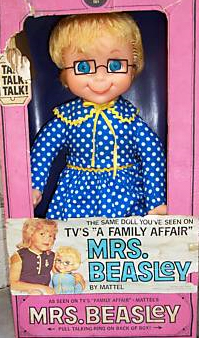
Mrs. Beasley doll image at www.vintage-bliss.com

Mrs. Beasley talking toy image at http://www.vintage-bliss.com

Earlier today, I heard Microsoft chairman Bill Gates responding to the question of what it will take to reinvigorate the U.S. K-12 educational system.

Incorporating technology that engages students more in the learning process into American classrooms was a part of his answer, and I agree with that suggestion.

After hearing Gates speak today, my mind drifted back to my childhood.

I recalled my first Apple personal computer and how my twin sister and I often excitedly sat on the same chair seat while we together learned how to use a computer for the first time.

Prior to the computer, we had some engaging toys that stimulated our thinking — a favorite one being Mrs. Beasley.  Who’s Mrs. Beasley?

Before Cindy Brady’s character on the famous ‘70s TV show, “The Brady Bunch,” had her Kitty Carryall doll, there was another young girl on another famous show who carried another famous doll, and that doll was Mrs. Beasley.

The character of Buffy on the late ‘60s TV show, “Family Affair,” was Mrs. Beasley’s owner.  I first became aware of Mrs. Beasley in the early ‘70s, while watching reruns of Family Affair, and I can remember the excitement of becoming a Mattel Mrs. Beasley talking toy doll owner myself.

The Mrs. Beasley doll had a voice recorder inside its body that posed questions to its owner, when the owner activated the recorder with a pull string.  Much of the joy that came from playing with Mrs. Beasley derived from the voice recorder technology component of the doll.  Mrs. Beasley’s ability to “talk to” her owner was highly engaging.

But, what did I learn from countless hours spent “talking” with Mrs. Beasley?  I don’t have an exact answer, but I’m sure that my verbal, thinking and imaginative skills were stoked.

I’m pleased to say that I still have my Mrs. Beasley doll, though she is now mute, due to the fact that her voice recorder is no longer working.  Even so, I’ll never forget Mrs. Beasley’s question, “If you had three wishes, what would you wish for?”

If my Mrs. Beasley doll could ask me that question today, I would respond by telling her that one of my wishes would be for all of the world’s children to have the pleasure of access to engaging technologies while learning.

What about you?  What role do you think technology can play in engaging our youth in the learning process?  And what were some of your favorite, pre-computer, engaging technologies and toys? (If you’d like, listen to a working Mrs. Beasley doll pose all of her questions.)

A Day for Film and Doughboys

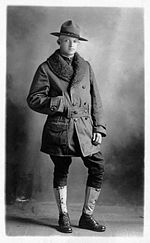
Wikipedia image of a typical wartime American doughboy

Wikipedia image of a typical wartime American doughboy

Have you ever lived by a coastal shore?

I could answer that question in the affirmative, having lived for a short time in one of North Carolina’s premier port cities, Wilmington.

My Wilmington abode was located a mere mile or so from Wrightsville Beach, N.C., and I can attest to the fact that there’s something different about living by the sea.

The coastal lifestyle is different, the local cuisine is different, local fashions worn by the local inhabitants are different.  Even the air itself is different.

Speaking of the air in Wilmington, over the years, the sea winds of Wrightsville Beach and the gentle Cape Fear River breezes downtown seem to have stirred up creative spirits and welcomed those with artistic souls.

Wilmington is the home of the University of North Carolina at Wilmington (UNC-W), and, if you’re a native of North Carolina, you’ve probably heard about the UNC-W Film Studies program and Wilmington’s ties to the Hollywood film industry.  Just this year, for example, big Hollywood names like Robert Downey, Jr. and Gwyneth Paltrow were in town working on location on a soon-to-be-released Hollywood film.

One of the largest examples of Wilmington’s role as a host to homegrown creativity is its annual Cucalorus Film Festival, which celebrates independent film and independent filmmakers.  More than 100 independent and international films will be showcased at this year’s event, which concludes today.

No longer living at the N.C. coast, I won’t be making any Cucalorus viewings this year, but I’m excited to share that I will be attending a 2012 Veteran’s Day release of Doughboy the Movie, an independent film that celebrates our U.S. Veterans and was produced by some creative souls in the hills of Wheeling, West Virginia.  Check out the Doughboy the Movie trailer to learn more about the movie and the Wikipedia doughboy definition to learn more about the significance of doughboys in U.S. military history.

What do you think?  Do you think living in a certain landscape can spark one’s creativity?   If so, which type of landscape do you think can engender the most creativity out of one’s soul?

Oh Sandy!

National Guard graphic imageThis post is part of a 2012 monthly series of MySheCave.com posts on the topic of the U.S. Constitution.

Similar to when Elton John changed his Candle in the Wind lyrics to honor the late Princess Diana (the revised tune was titled, “Goodbye England’s Rose”), if we were to ask Barry Manilow to revise his famous tune, “Mandy,” to honor the victims of this past week’s Hurricane Sandy, he could tweak one of the most famous lyrics of the Mandy song to be:

 “Oh Sandy well,
You came and you left our hearts breaking.

The devastation from Sandy’s wake has left so many of us living in outlying areas wondering, “How can we help?”  Here is a list of charitable organizations to which you can denote to help victims of the storm.

One of the ways the U.S. federal government has been assisting Hurricane Sandy victims is through the deployment of the National Guard of the United States.

Do you know which Article of the U.S. Constitution authorizes the existence of the U.S. National Guard?

According to Wikipedia, Article One, Section 8; Clause 14 gives the United States Congress, “the power to pass laws ‘calling forth the Militia to execute the Laws of the Union, suppress insurrections and repel invasions.’ ”  The Wikipedia entry goes on to state that Title 10 of the United States Code defines National Guard members as a subset of the “Militia.”

What is your experience with the U.S. National Guard?  Are you aware that the National Guard is the oldest component of the U.S. armed forces?

Do you personally know any members of the Guard?  And, have you ever witnessed a live deployment?

Without doubt, many of the Hurricane Sandy victims likely viewed the National Guard vehicles and troops who were trudging through the floodwaters earlier this week like guardian angels.

Taking Stock of Your Personal Shares

Share word image by HubSpo

Share word image by HubSpot

As a digital marketer, when I hear the word, “share,” my mind often goes first to the concept of “social sharing,” i.e., the idea of sharing marketing messages via social media channels like Twitter, Facebook, etc.

However, I also enjoy following business and financial news, so my thoughts often head in a financial direction, specifically towards the U.S. stock market, upon hearing the word, “share.”

For example, my ears perked up on Friday (10/26/12) after hearing the latest news about shares of Apple stock.  Apple shares were down 1.9% and fell below $600 for the first time in three months, after Apple’s warning that its costs for making new products will likely cut into its profits in fourth quarter 2012.

What about you?  Do you pay attention to financial news and reports about U.S. or international shares of stock?  If so, which financial news channels do you visit to learn the latest news on the financial front?

If you visit Google, you can easily find consolidated lists of financial news sites, such as this list of
10 Financial Websites That Help You Stay On Top of the Market.”

I’d like to mention a fairly new online community that’s dedicated to educating women on financial issues and helping women better manage and build their personal net worth.  In 2009, young entrepreneur Amanda Steinberg, founded the DailyWorth community, and the community’s DailyWorth e-newsletter now has more than 20,000 subscribers.

I enjoy reading the easy-to-understand, valuable financial tips that are shared in each DailyWorth
e-newsletter issue that I receive, and I’ve even had the pleasure to speak with Amanda directly, after she invited subscribers like me to call her and share feedback and ideas for inclusion in future e-newsletter issues.  As a woman in business, I admire and appreciate Amanda’s open leadership style.

Back to sharing, the Wikipedia definition of the word, “sharing,” includes this statement: “Sharing is a basic component of human interaction, and is responsible for strengthening social ties and ensuring a person’s well-being.”

How often do you share in your life? What do you share and through which channels?

Traveling Back and Forward in Time

View of Mirror lake near Centennial, WY

View of Mirror lake near Centennial, WY

Have you ever visited a new landscape and been transported back in time?

Over this past weekend, I traveled to the state of Wyoming for the first time, specifically visiting the old American railroad town of Laramie, home of the University of Wyoming.

While touring the Laramie Plains Museum at the Historic Ivinson Mansion in downtown Laramie, I had the opportunity to step inside an old-school American schoolhouse (the schoolhouse previously resided on land in the Wyoming countryside but has since been relocated to the museum location downtown):

inside view of prairie schoolhouse at Ivinson Mansion, Laramie, WY

inside view of prairie schoolhouse at Ivinson Mansion, Laramie, WY

Stepping into the log-cabin-style schoolhouse was like stepping back in time.  My mind immediately drifted back to my childhood and back to an old friend, Laura.

Laura, who?  Laura Ingalls Wilder, of course.  I remembered reading her Little House series of books that described what life was life for many American pioneers.  I also remember the hours I spent watching the Little House TV series, adapted from the book series and based on Laura’s life.

Laura was from Wisconsin rather than Wyoming, but the schoolhouses that she described in her books matched the one that I stepped in at the Invinson Mansion perfectly.  And, in a fast-paced world, it was nice to take a step back to remember a different time in America.

My Ivinson Mansion visit also made me newly aware of another pioneering woman from the past, Nellie Tayloe Ross:

framed photo of Nellie Tayloe Ross at Ivinson Mansion, Laramie, WY

framed photo of Nellie Tayloe Ross at Ivinson Mansion, Laramie, WY

Nellie was Wyoming’s Governor and the first woman Governor in the United States.  I should have guessed that the “Equality State” of Wyoming could tout a first for women.

My experience in Laramie was a reminder that travel can lead to new discoveries and rediscoveries.  When was the last time you traveled?  What new things did you learn?  What things did you remember?

Art versus the Artists

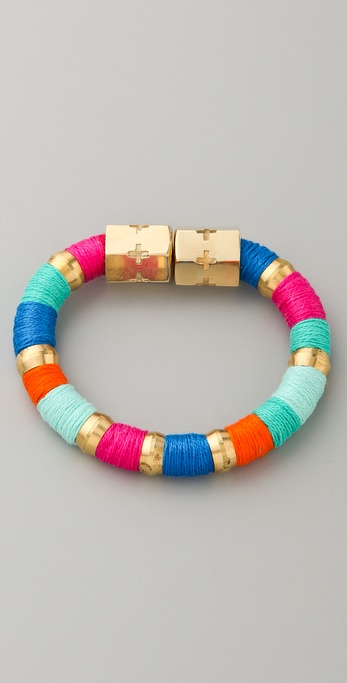
www.whatshaute.com image of Holst+Lee bracelet

What’s Haute Magazine image of Holst+Lee bracelet

A personal friend of mine is focused on the art of jewelry design.  Last week, she and her business partner received some fantastic recognition when their colorful Holst+Lee collection was featured in primetime on NBC’s TODAY morning show.

From a business perspective, I was excited to know that my friend’s jewelry line would be beamed into the homes of hundreds of thousands of TODAY show viewers — potential future customers.  However, what was more thrilling was the knowledge that her art, a reflection of her personal sources of inspiration, would be flying further in a way than ever before.

How?  After an artist like my friend originally creates the piece, the resulting work can continue to inspire others who witness the art.  In fact, art very often transcends the artist.

How does art personally touch your life?  Do you know many artists personally?  Or, are you more familiar with works of art than the creators themselves?

Listed below are three examples of “great works” of art:

  1. Beowulf the old English epic poem;
  2. Rhapsody in Blue – the 1924 musical composition; and
  3. The Taj Mahal – the marble mausoleum located in India.

Do you know who created each of these works?  If not, does that fact matter?

When it comes to art history, do you think that the artists or their works are most valuable?  Is there a clear winner when it comes to that question, or do you think it’s a tie situation?  Personally, I’m a fan of both.

Has Uncle Sam Gained Weight?

mariokang wordpress.com site Fat Uncle Sam image

Fat Uncle Sam image – mariokang wordpress.com site

This post is part of a 2012 monthly series of MySheCave.com posts on the topic of the U.S Constitution.

Often during political campaign periods in the U.S., we hear from candidates who tout the importance of “states’ rights” — the political powers reserved to individual U.S. states versus the U.S. federal government.

For example, in the past, Texas governor and former 2012 presidential candidate Rick Perry has been outspoken in his support of the concept of states’ rights and the sovereignty of his home state.  Watch this video of Governor Perry declaring Texas’ sovereignty.

Did you know which Article within the U.S. Constitution outlines the duties of the states in relation to each other and the federal government?  Article Four outlines the jurisdiction of the U.S. federal government with respect to the states and details the authority given to the states.

Beyond Article Four, the Tenth Amendment goes one step further in addressing the powers given to the states stating:

“The powers not delegated to the United States by the Constitution, nor prohibited by it to the States, are reserved to the States respectively, or to the people.”

States’ rights advocates, such as Perry, often reference Amendment X in their speeches.

Besides Rick Perry, are you aware of other U.S. politicians who are states’ rights proponents?  And, how important is the concept of states’ rights to you?  Do you know of any U.S. states that currently have individual laws or regulations that you think are strange or unjust?

Last, do you think the level of power between the U.S. federal government and the U.S. states is well balanced at this time in U.S. history?

Is Uncle Sam maintaining a healthy weight, or does he need to go on a diet?