Who Are the Social Early Birds?

Adorable early bird imageA product marketing executive for whom I once worked asked me the question: “You know how the game is played right?” As I remained silent for a few seconds, he went on to answer his own question advising, “it’s not necessarily about bringing a perfect idea or product to the market.  Often, whoever gets there first wins.”

Over the years, that advice has stuck with me.  I’ve never forgotten his suggestion that seizing share early in a new market space can make a huge difference in the long-term success of a product and the organization that brings the product to life.

No doubt, to sustain and grow market share, a company must ensure its product continually provides tangible value to the market, but it does seem logical that starting from a leading position rather than from the position of a chaser could help ensure a product’s success and a company’s competitive position.  Playing catch-up usually isn’t fun.

Over the past few years, countless organizations and individuals have been “staking their claims” and rushing to establish a head-start presence in the new social media landscape.  Do you know which organizations have succeeded so far?

The 2010 book, “Branded! How Retailers Engage Consumers with Social Media and Mobility,” highlights examples of several major retail organizations, like Starbucks and Zappos, who embraced the social market space early in the game.

And, what about individuals who jumped into the social media space early?

I’d like to share the name of one early bird blogger who I know personally.  I entered the world of blogging in January of 2008 and have been thinking that I might be considered an early adopter, but Ian Willams, a fellow University of North Carolina at Chapel Hill grad, has me beat by six years.  Ian, co-author of the non-fiction bestseller, “13th Gen: Abort, Retry, Ignore, Fail,” has authored his personal blog at www.xtcian.com since 2002!

What about you?  Can you share the names of organizations or individuals who you think have already established a lead in the social media game?  I’d love to hear who you think is out in front and whether you think early bird status in the social media world makes a difference when it comes to competitive advantage.
Play Whit Again, Sam.

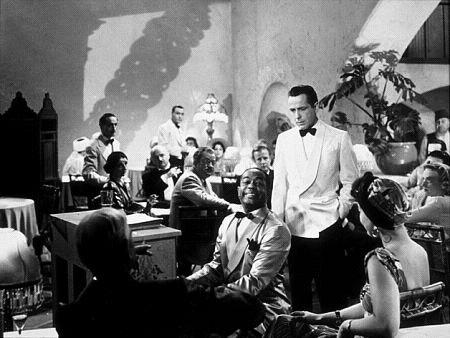
Casablanca Play It Again, Sam.It feels cliché to draft a post about a certain American singer who left the world yesterday, February 11, 2012, however, my fingers somehow are hitting the keys.

Hitting the keys…now, didn’t she?

Last evening I heard a 40-to-50-something say that her “music was the soundtrack of our lives.”

Certainly, many of the lyrics that she sang have held their place in the minds of those of us who came into our adult selves in the late 80’s and early 90’s, while experiencing the meteoric rise of the Internet, mass media and American pop culture.

Like Britain’s Diana, her gorgeous, seemingly perfect image permeated magazines, TVs and computer screens at the close of the 20th century, leaving students and addicts of U.S. pop culture feeling a strong connection with her.

For example, when she sang, “I’m Every Woman,” millions of listening women of all races longed to think that they might not be so different from the beautiful young woman who so effortlessly belted out the tune.

In the end, the reality of her life showed truth in those hopes.

She, unlike the captured iconic images of her, was not perfect.  She, in fact, was a real woman, who experienced ups and downs, achievements and disappointments, love and loss.

Without doubt, her quick and untimely exit yesterday has left those who personally knew her deeply saddened.  But, what about those of us who only knew her star image and her music?  What’s missing for us?  What’s newly lost?

Has a mile-marker of our lives been knocked down somehow?  Is a certain time period that was already finished somehow over yet again?

Whitney Houston the woman is gone, but her voice, which is being referred to by so many today as “The Voice,” remains.  And, no doubt, as time goes by, there will be countless Casablanca-like requests to “play it again.”

Bowie, Crow and Amendments

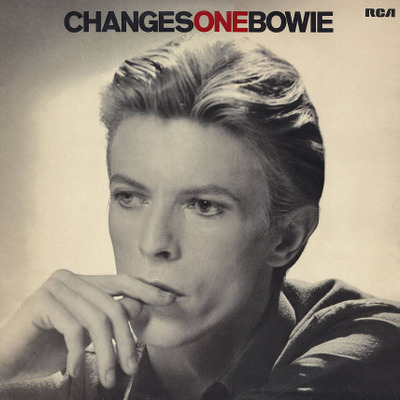
Changes David BowieThis post is part of a 2012 monthly series of MySheCave.com posts on the topic of the U.S. Constitution.

In his 1971 hit single, “Changes,” Brit David Bowie sang about the changes artists often confront while reinventing themselves and their crafts.  Besides Bowie, countless other singers and singer-songwriters over the years have focused on the concept of change.  In 2010, Robin Raven highlighted 10 modern songs about change in the online article, “10 Best Songs About Change,” and Bowie’s “Changes” made the list.

You may know something about evolving as an individual, but are you familiar with the process for changing the U.S. Constitution?  Do you know which of the seven Articles within the Constitution deals with changing the document?

Article Five describes how the Constitution may be amended and how Amendments to the Constitution can be proposed and ratified.

According to Article Five, there are only two ways in which an Amendment may be proposed.  Changes can be proposed either by:  1- two-thirds votes of both houses of the U.S. Congress or 2- a national convention requested by legislatures of at least two-thirds of U.S. states.  According to Wikipedia, “All of the ratified and unratified amendments” have been proposed by the first method.”

Article Five also identifies two ways in which proposed Amendments may be ratified.  The two ways to ratify an Amendment are: 1- ratification by the legislatures of three-fourths of the states and 2-ratification by state conventions of three-fourths of the states.  According to Wikipedia, “only the Twenty-first Amendment” has used the second method.

Wikipedia highlights that U.S. Representatives and Senators typically propose up to 200 amendments during each year, but “most amendments never get out of Congressional committees.”  In fact, only 27 Amendments to the U.S. Constitution have been ratified to date.  And, did you know that the Twenty-seventh Amendment was ratified in 1993 and 203 years after originally being submitted to the states for ratification?

Without doubt, in crafting Article Five, our Founding Fathers made sure that changing our Constitution would not be an easy task.

What about the changes that you’ve made in your life to date?  Have you applied the same sort of conservative, serious “Constitutional” approach when making significant life changes?  Have you made quick or slow important life decisions?

And, would you agree with singer-songwriter Sheryl Crow that “a change would do you good?

A Classic Question for You

Classic Ford Model T car

Classic Ford Model T

The 2011 Oscar-nominated French film The Artist pays homage to one classic genre of film: silent film.  In 100 minutes, the film’s audience is reminded of that certain breed of film that began in the late 19th century and ended at the start of the 20th.

Besides silent film, what else meets the standard of “classic” in our world?  If asked about classics, what words would roll off your tongue?

What about classic U.S. Western films and TV shows? Would you respond with Duel in the Sun or The Lone Ranger, maybe?  Or, what about scary films?  Maybe you’d highlight “The Shining or “Psycho” as classics?

Which classic books or novels would you list?  Moby-Dick, The Sound and the Fury, The Grapes of Wrath and The Adventures of Huckleberry Finn may come to your mind.  And, what about classic cars?  You might reply with, “the Ford Model T.”

In the future, many global tennis fans may refer to today’s five-hour, 53-minute, men’s final tennis match between Rafael Nadal and Novak Djokovic at The Australian Open as a “classic” sports event.

Wikipedia defines classic as “something that is a perfect example of a particular style, something of lasting worth or with a timeless quality” and notes that the something defined as “classic” may be a noun or adjective.

Certainly, we’ve all experienced memorable and classic moments, but, do you think someone can be a classic?  If you think so, then what’s the secret formula for becoming a classic?

A close friend once told me, “you become a classic when you transcend time.”  If that’s the case, personally, I think that cars, sports events, books and films may have a head start.  What do you think?


Art and Its Magnetic Pull

Modern Art Magnet in Pudong district Shanghai, China

Modern Art Magnet in Pudong district Shanghai, China

A few recent hours spent walking through the galleries of the North Carolina Museum of Art allowed me to witness the artistic works of some of history’s most famed artists, including Rembrandt, Rodin, Audubon, and O’Keeffe.

One aspect of O’Keeffe’s Cebolla Church painting particularly caught my eye.  Like countless others who have viewed the painting, the mystery of “the thing in the window” captured me and really “drew me in.”

Landscape paintings can similarly tug at you.  During my museum visit, I personally witnessed another visitor stand in front of a landscape painting and almost exclaim:  “I love this kind of painting!  This is the kind that makes me feel like I want to jump into it!

What about you?  Have you ever wished for a Mary Poppins film “one, two, three”-like moment while viewing a landscape painting?  Can you recall a special painting that pulled you into its subject like a magnet?

Or, do you think another art form besides painting is the best form to act as a vessel to carry you back to a certain historical period or forward into your imagination and vision of things to come?  Do you prefer sculpture or music, maybe?

Art, in all of its forms, can move the human spirit.  But let us not forget those individuals who create the works.

If you were asked to draft a “Top 10” list of artists who have created works that have personally moved you, who would comprise your list?

When it comes to art and its impact on your life, which, if any, artists or works have changed you for the better or worse?

A Second Hand Post

Handwritten Blog Post

Handwritten Blog Post

Note:  This blog post was originally handwritten.

The January 9 and 16, 2012 issue of Newsweek featured an article by Sharon Begley on how to raise your IQ along with “31 Ways to Get Smarter in 2012.” One suggested way to increase your smarts was to write by hand.  The article suggested that handwriting “engages more sections of your brain than typing” and that you can recall ideas more easily after writing them down.The suggestion made me think and wonder:  beyond the obligatory, occasional thank you notes penned on monogrammed stationery or the checks written for specific personal purchases or bills payments, how often do I handwrite in this increasingly digital world?

When considering my history when it comes to handwriting, I still remember the thrill of being allowed to write in cursive form in the third grade during the early ’70s.  I also remember that my father ,who practiced law in the ’70s, had a secretary who knew how to write in shorthand.  And, I remember the fun of writing in “Pig Latin” with early childhood friends.

I remember the excitement of receiving handwritten “love notes” from classmates in middle and junior high school as well as discovering the art of poetry writing.  And, I can’t forget how “exotic” it felt to communicate via handwritten letters with a French Pen Pal during my ninth grade year.  Such a global communication is so commonplace now, as we live in a world with global Facebook Friends and Twitter Followers.

I can recall handwriting my high school valedictory speech, the verbal delivery of which was preserved in a VHS tape, and how could I forget the countless notes hand-drafted during my college courses or those two-hour hand-written college exam essays?

Though I learned to type in high school, my transition from routine handwriting to the online digital world began with a Brother brand word processor in the early ’90s.  I became fully entrenched in online technology and endeavors when I began working as a communications specialist on the former IBM PC Company division’s internal SAP software implementation.  From that point, my online typing overtook my handwriting efforts.

Over time, many of my most treasured keepsakes are hand-written cards, poems and letters from family, friends and loved ones. I own journals and boxes to store the memorable words that carry so much meaning.

What about you?  What have been your most significant personal writings?  How have you maintained or honored those words?  And, how often do you handwrite today?

Maybe you should write your answers to those questions down.  According to the Newsweek article and author Begley, your brain may appreciate your doing so.

Sharing Constitutional Content in 2012

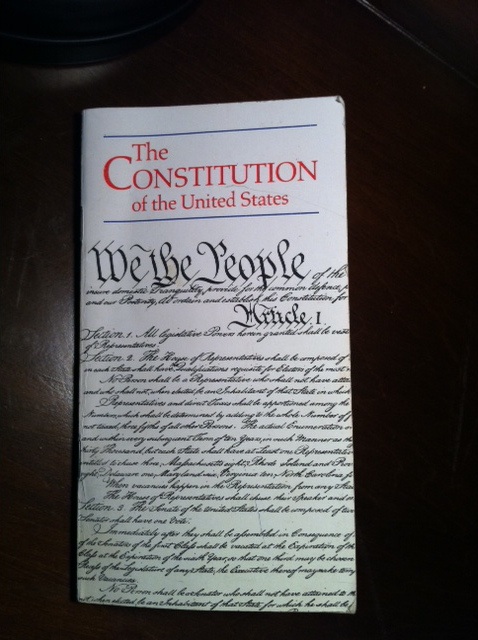
U.S. Constitution Pocket Guide

U.S. Constitution Pocket Guide

Expect at least one MySheCave.com post per month in 2012 that will examine an aspect of the U.S. Constitution, the anchor of our American society.

Following a year (2011) in which TIME magazine named “The Protestor” as its “Person of the Year” and living in a time in history when so many are protesting for democratic reforms and higher individual freedoms, it seems fitting to remind ourselves of the content contained within the document that has protected our freedoms and ways of life since our U.S. nation was founded.

To begin, how familiar are you right now with the Constitution and its Articles?  For example, do you recall the year and the U.S. city in which the Constitution was signed?  (The answers would be 1787 and Philadelphia.)   And, can you recite the first 15 words of the document?  (“We the People of the United States, in Order to form a more perfect Union…”)

In recognition of the fact that 2012 is a presidential election year here in the U.S., I want to highlight Article Two, the Article that creates the executive branch of the U.S. government, defines the role of the President of the U.S. and contains four sections:

  • Section 1 begins by stating, “The executive Power shall be vested in a President of the United States of America.”  Then, the section explains the four-year Presidential and Vice-Presidential electoral process and Congress’ related role, defines the specific personal criteria (U.S. citizenship and age) for the position of U.S. President and calls out the requirement that the President must take a specific Oath “before he enter on the Execution his Office.”
  • Section 2 names the President as “Commander in Chief of the Army and Navy of the United States” and primarily calls out his power to make treaties and appoint Ambassadors, U.S. Supreme Court Justices and other Officers of the U.S.
  • Section 3 references the fact that the President will “from time to time” give Congress information about the “State of the Union” and speaks to the President’s jurisdiction “on extraordinary Occasions” to convene both Houses of Congress “or either of them.”  Section 3 also mentions that the President can adjourn Congress “in Case of Disagreement between them” and “shall Commission all the Officers of the United States.
  • Section 4, the final section of Article Two, states that the President, Vice President and “all civil Officers of the United States” will be removed from “Office on Impeachment for, and Conviction of, Treason, Bribery, or other high Crimes and Misdemeanors.”

In this election year, amidst the partisan fighting occurring daily between our two U.S. political parties as well as the daily political punditry highlighted on TV and the Internet, it’s easy to grow weary of the U.S. presidential election process.

However, when you consider the amount of power that the words of Article Two will require our next President to embrace, don’t you think it’s important for American citizens to embrace the presidential election process?

If you’re an American who’s registered to vote in the upcoming primaries and in the general election in November, I hope you’ll remember all of the power that Article Two will hand to the winner before you place your vote.

Making Sense Out of Your Year

Lost-and-Found SignAt year’s end, so many of us are looking ahead, contemplating new resolutions and goals.  Just as many of us, however, may be reflecting on time and opportunities that have passed.

How about you?  How are you approaching this year’s end?  Are you thinking about all that you will strive to accomplish in 2012?  Are you setting new resolutions or new goals for the coming year?

Or, are the finish lines and personal goals that you have previously established but have yet to reach giving you the most reason for pause and consideration on this last day of 2011?

If you are part of the latter group, I’d like to share this YouTube video clip from the 1995 movie, Sense and Sensibility, based on Jane Austen’s novel of the same name.  In the clip, you will see the character Colonel Brandon reading aloud lines from Spenser’s Faerie Queene to the character Marianne, and, at second 13 of the clip, you will hear:

“For there is nothing lost, but may be found, if sought…”

Consider those words and the implied directive to rethink those goals that you may have already deemed lost or unachievable.

For example, could you achieve your unattained past goals through different means or action? Could you adjust your prior goals, so that those goals could be partially, if not wholly, achieved?

There are Buddhist philosophers who subscribe to the belief that we die to each moment and that time experienced is forever lost to us.

Au contraire, I’m including the line from Spenser in this final 2011 blog post to remind each of you that you still have time to reexamine all new avenues for personal success, even amongst your previously traveled roads.

Cheers to you and all of the success that you find in the New Year 2012!

When Social Gets Personal

Social Gets Personal GraphicEarlier this year, I wrote a blog post titled, “Team @BarbieStyle or Team @OfficialKen,” about my favorite social media marketing campaign of the year.

At this time, I’d like to clarify and state that Mattel’s Barbie and Ken campaign was, “my favorite social media marketing campaign designed and executed by others.”

I also want to mention two other 2011 social media marketing activities that were personal favorites and also creations of mine.

After volunteering 10 years with local chapters of The Association of Junior Leagues International, Inc., I’m currently a Sustainer member of the Junior League of Raleigh (JLR).  Each year, JLR hosts the “A Shopping Spree!” local holiday shopping event, raising thousands of dollars to benefit local at-risk youth.

This year, I envisioned a social media video series to raise broader awareness of the 2011 “A Shopping Spree!” event and bring the event to life for those unable to attend.  I then engaged the JLR Active membership to make the event video series happen.  I even served as the on-air host for the 14 video episodes that were taped at the event.  Check out the new JLR YouTube Channel and the “Spotlight on the Spree!” Playlist.  You can also search Twitter using hashtag #JLRSPREE11 to see the related tweets.

And, speaking of Twitter, another favorite campaign was an online holiday challenge event campaign that I envisioned and then executed on Twitter.  I initiated a “25 Workouts to Christmas” campaign at the start of December with a tweet that challenged all of my Followers to join me in a challenge to complete 25 workouts by Christmas Day on December 25.  Search Twitter using hashtag  #25workouts2Xmas, if you’d like to see the related tweets.

Both of these 2011 social media efforts were meaningful to me.  It’s personally gratifying to know that the JLR YouTube Channel has received more than 1,300 video views since its debut in November.  Also, I’m pleased that I successfully completed my 25 workouts before December 25 and have helped to inspire others toward healthy behavior during the food-rich holiday season.

How many of you are personally engaged in social media marketing or social media channels?  How has your life changed since you have become personally involved in these new digital modes of communication?  Do you have new favorite ways to communicate with your family, friends and business associates?

How much more or less social have you become?  Are you leveraging these new communications channels to the benefit of yourself and others?

Is your personal digital voice being heard?

Calling All Crybabies…

crybaby imageWhen you were born, it’s likely that your first interaction with the world was a cry.

And, throughout your infanthood, childhood and teenage years, it’s probable that you shed many a tear.

So, when was the last time you cried as an adult?  What provoked your tears?  And, did your crying serve a purpose?

As adults, we are not necessarily encouraged to express ourselves through tears.  For example, in 1978, with her famous Don’t Cry Out Loud album and single track of the same name, Melissa Manchester instructed us through her song lyrics to “…keep it inside, and learn how to hide your feelings.”

Are there times, however, when crying out loud is justified?  And, are there times when crying serves or helps to serve a positive individual or group purpose?

What about the battle cry?  Some may argue that battle cries are more show than substance, but surely some movements for good have been aided with an inspiring call for action.

And, consider sports.  Think about the individual athletes who seem to be aided in their efforts through the release of cries.

Have you ever heard Venus and Serena Williams grunting as they play a point during a doubles tennis match?  Watch and listen to this example.  And, have you ever seen and heard a heavyweight lifter lifting hundreds of pounds?

There is also a great deal of screaming in martial arts.  Some explanations are that yelling helps to make martial arts techniques more accurate, allowing the martial artist increased focus for kicks, strikes, punches, etc.

When it comes to sports, fans may be the biggest examples of crybabies.  Actively yelling to cheer on one’s favorite athlete or team has got to make a positive difference, right?

Crying seems to have a sad and negative associated connotation.  I’d love to hear your examples of instances where crying has been a good thing.